




Welcoming a new baby into your home comes with a mountain of decisions and choosing the right bedding is one that genuinely matters for your baby's safety, comfort, and sleep quality. As a UK parent, one of the most confusing areas is understanding cot bed sheet sizes, cot bed dimensions and how to match the right bedding to the right mattress. Too many parents buy fitted sheets that pop off in the night or duvets that bunch up dangerously at the sides, simply because no one explained the sizing clearly.
This guide covers everything: from standard cot bed measurements and cot mattress sizes UK parents need to know, to how to choose the right cot bed duvet size, fitted cot sheets, and full baby bedding sets. Whether you are shopping for a newborn or transitioning a toddler into a cot bed, you will find practical, expert-backed guidance here. At Dtex Homes, we have helped thousands of UK families find the perfect bedding fit — and this guide brings that experience directly to you.
Why Choosing the Correct Cot Bed Sheet Size Matters
It might be tempting to assume that a sheet is a sheet — that a few centimetres here or there will not make much difference. But when it comes to cot bed sheet size, precision is not a preference, it is a safety necessity. The cot bedding size you choose directly affects how securely the sheet stays on the mattress, how comfortably your baby sleeps, and — most critically — how safe your baby's sleep environment is throughout the night.
Understanding the link between cot dimensions, mattress measurements, and the bedding that goes on top is the foundation of safe and restful baby sleep. Let us break down exactly why this matters.
How the Right Fit Improves Baby Safety
A well-fitted cot sheet stays firmly in place around the mattress without wrinkling, riding up, or creating loose folds that a baby could press their face into. The NHS guidelines on safer sleep and the Lullaby Trust's safer sleep advice both emphasise that the sleep surface for a baby must be firm, flat, and free from loose fabric. A sheet that is correctly sized to the cot mattress dimensions achieves all three of these things naturally.
When you buy fitted cot sheets matched precisely to your cot bed mattress size, the elasticated edges grip the underside of the mattress securely. This means even if your baby rolls or wriggles during the night, as babies frequently do, the sheet remains in position. This single factor removes one of the most common and preventable sleep hazards in a baby's cot.
Key Safety Benefits of a Correctly Fitted Cot Sheet
- Prevents the sheet from bunching up around the baby's face or neck
- Keeps the sleep surface firm and smooth, reducing suffocation risk
- Stays secure even when the baby moves, rolls, or kicks during sleep
- Eliminates loose fabric that could become a tangling hazard
- Supports compliance with UK cot safety standards and NHS safer sleep guidance
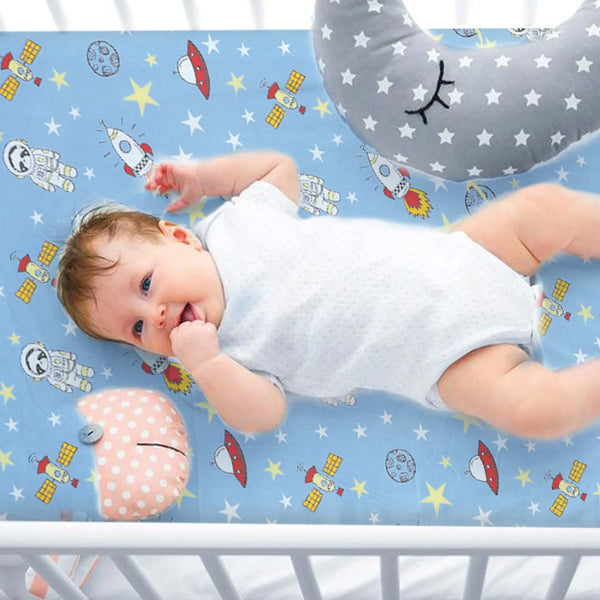

Why Loose or Tight Sheets Can Be Dangerous
Both extremes, a sheet that is too loose and one that is stretched too tight, carry real risks in a baby cot environment. A sheet that is too large for the cot mattress size will have excess fabric that bunches, shifts, and potentially covers the baby's airway. Overly loose bedding is consistently cited by safe sleep organisations as one of the leading risk factors in infant sleep environments.
On the other hand, a sheet that is too small for the cot bed measurements will not sit properly over the mattress corners. It will either not fit at all, or it will stretch so tightly that it pops off the corners, often in the middle of the night. A detached sheet creates immediate loose fabric danger and also disturbs your baby's sleep, which means disturbed sleep for you too.
Signs Your Cot Sheet Is the Wrong Size
- Corners lifting away from the mattress repeatedly
- Excess fabric visible on the surface or at the sides
- Sheet feels stretched extremely tightly across the mattress
- Visible wrinkling or folding on the sleeping surface
- Sheet bunches up when the baby moves
If you are experiencing any of the above, it is almost certainly a cot sheet size mismatch rather than a sheet quality issue. Always measure your cot mattress dimensions before purchasing bedding.
The Connection Between Mattress Size and Cot Bedding
Your cot bed sheet size should always be determined by the size of the mattress, not the size of the cot frame. This is a distinction many parents miss. The cot frame is always slightly larger than the mattress to allow for safe placement and removal of the mattress. So if you measure the cot frame and buy a sheet to match those cot bed dimensions, the sheet will invariably be too large.
Always measure the cot mattress directly, its length, width, and depth and use those figures when selecting cot size bedding. The depth of the mattress is particularly important for fitted sheets, as the elasticated pocket needs to be deep enough to fit snugly beneath the mattress without straining. Most standard cot mattresses UK are between 8cm and 13cm in depth, so a fitted sheet with a pocket depth of at least 15cm is generally recommended for a secure fit.
Measuring Your Cot Mattress: What to Record
- Length: Measured along the longest edge of the mattress
- Width: Measured across the shortest edge
- Depth: Measured from the top sleeping surface to the base
Once you have these three figures, you can confidently shop for fitted sheet for cot mattresses that will fit correctly and safely every time.
Benefits of Well-Fitted Cot Sheets for Better Sleep
Beyond safety, well-fitted cot bed sheets make a genuine difference to how well your baby sleeps. A smooth, wrinkle-free sleeping surface is simply more comfortable, much in the same way that a neatly made bed helps adults sleep better. Babies, especially newborns, are highly sensitive to tactile discomfort, and even a small ridge or bunched section of fabric can disrupt an otherwise settled sleep.
Good quality fitted cot sheets made from soft, breathable fabrics, such as 100% cotton or jersey, that fit the cot mattress size correctly will help regulate your baby's temperature and maintain consistent comfort throughout the night. This contributes to longer, more settled sleep periods, which benefits the whole family.
When you shop for baby cot bedding at Dtex Homes' children's bedding collection, you will find fitted sheets and bedding sets designed specifically to meet standard cot bed sheet sizes — combining safety, comfort, and quality materials that wash and wear beautifully.
What Is a Cot Bed? Understanding Cot, Cot Bed, and Crib Differences

Before diving into sizes and measurements, it is worth making sure you are shopping for the right type of baby bed entirely. The terms cot, cot bed, and crib are often used interchangeably by new parents, but they refer to three distinctly different products with different dimensions, different bedding requirements, and different longevity in your nursery. Getting this right from the start will save you from buying the wrong size bedding, the wrong mattress, and potentially the wrong bed altogether.
What Is a Standard Cot?
A standard cot is a fixed-size baby bed with four solid sides, typically slatted on at least two sides to allow airflow. Standard cots are designed specifically for babies and younger infants, and they do not convert or extend as the child grows. The standard cot dimensions in the UK are typically 120cm x 60cm, though some smaller cots measure 100cm x 50cm.
Because a standard cot has a fixed size, its cot mattress dimensions and cot sheet size requirements are straightforward and consistent across most UK brands. The standard cot mattress size is most commonly 120cm x 60cm, and fitted sheets for standard cots are widely available in this size.
Standard Cot at a Glance
- Typical internal dimensions: 120cm x 60cm
- Suitable age range: Newborn to approximately 18–24 months
- Converts to toddler bed: No
- Bedding size required: 120cm x 60cm fitted sheet
What Is a Cot Bed?
A cot bed is a larger, more versatile baby bed designed to grow with your child. It features removable side panels that allow it to be converted from a fully enclosed cot into an open-sided toddler bed when your child is ready. This extended usability makes a cot bed a popular and cost-effective choice for many UK families.
The standard cot bed size in the UK is 140cm x 70cm, which is notably larger than a standard cot. This means the cot bed sheet size and cot bed mattress measurements are different from those of a regular cot, a detail that catches many parents out when buying bedding. Always confirm which type of bed you have before purchasing cot size bedding.
Standard Cot Bed at a Glance
- Typical internal dimensions: 140cm x 70cm
- Suitable age range: Newborn to approximately 4 years
- Converts to toddler bed: Yes
- Bedding size required: 140cm x 70cm fitted sheet
Cot vs Cot Bed: What's the Difference?
The primary difference between a cot and a cot bed comes down to size, longevity, and versatility. A standard cot is smaller and designed purely for infant use — typically up to around 18 to 24 months. A cot bed is larger, built to last longer, and converts into a toddler bed when the sides are removed, making it usable up to around age 4 in most cases.
From a bedding perspective, the cot bed dimensions mean you will need larger sheets, a larger cot bed duvet, and a larger cot mattress than you would for a standard cot. This is not interchangeable, cot sheets will not fit a cot bed mattress and vice versa, so always confirm your bed type before buying baby cot bedding.
Cot vs Cot Bed: Side-by-Side Comparison
| Feature | Standard Cot | Cot Bed |
|---|---|---|
| Typical dimensions | 120cm x 60cm | 140cm x 70cm |
| Suitable age | 0–24 months | 0–4 years |
| Converts to toddler bed | No | Yes |
| Sheet size needed | 120cm x 60cm | 140cm x 70cm |
| Duvet size needed | 120cm x 90cm (approx) | 120cm x 150cm (approx) |
| Longevity | Shorter term | Longer term — better value |
Cot Bed vs Crib: Key Differences Explained
A crib is smaller still than either a cot or a cot bed. Cribs are designed for newborns and very young babies, typically from birth to around 6 months and are often oval or rectangular with a rocking or gliding base. They are not designed for long-term use, and their crib bed dimensions are considerably smaller than a standard cot.
Typical crib mattress dimensions in the UK are around 83cm x 40cm, which means crib bedding measurements and newborn crib sheets are entirely different from cot bed sheet sizes. If you are buying bedding for a crib, ensure you are buying specifically sized crib mattress bed sheets, regular cot fitted sheets will be far too large.
Crib vs Cot vs Cot Bed: Dimensions at a Glance
| Bed Type | Typical Mattress Size | Suitable Age |
|---|---|---|
| Crib | ~83cm x 40cm | 0–6 months |
| Standard Cot | 120cm x 60cm | 0–24 months |
| Cot Bed | 140cm x 70cm | 0–4 years |
Which Option Is Best for Newborns and Toddlers?
For most UK families, a cot bed offers the best long-term value. While the upfront cost is higher than a standard cot, the ability to use the same bed from newborn through to age 4, simply by removing the side panels when the time comes, means fewer purchases overall. The cot bed bedding size is also more widely available than crib sizes, making it easier to find fitted sheets, duvets, and bedding sets in a range of styles and fabrics.
If you are working with limited space, a standard cot or crib may be more suitable for the early months, transitioning to a toddler bed later. However, if nursery space allows, investing in a quality cot bed from day one, and buying the correct cot bed size bedding to match, is the approach recommended by most nursery experts and parenting organisations.
When Should You Move from a Cot to a Cot Bed?
There is no fixed rule on when to make the transition from a standard cot to a cot bed or toddler bed, but most child development guidance suggests the transition happens naturally between 18 months and 3.5 years. The most common triggers are the child attempting to climb out of the cot, reaching the maximum weight or height limit specified by the manufacturer, or simply showing signs of readiness for more independence during sleep.
When transitioning to a cot bed used as a toddler bed, you may find that the cot bed sheet size and cot bed duvet dimensions remain appropriate — the bed frame is the same, after all. Some parents also choose to introduce a small toddler duvet and toddler cot bed duvet set at this stage, which is generally safe from around 12 months according to NHS safer sleep guidance.
Standard Cot Bed Sizes and Dimensions in the UK
One of the most frequent questions parents ask when preparing a nursery is: what are the actual dimensions of a cot bed? The answer is reassuringly consistent across most UK manufacturers, though some variation does exist, particularly with European and travel cot designs. Understanding the standard cot bed measurements will help you shop confidently for mattresses, fitted cot sheets, duvets, and full cot bedding sets without second-guessing whether things will fit.
Standard Cot Bed Measurements (cm & inches)
The standard cot bed size in the UK has an internal sleeping area of 140cm x 70cm. This is the measurement that matters most when selecting bedding and a mattress — not the external frame dimensions, which will always be slightly larger. Below is a full breakdown of standard cot bed dimensions for UK parents:
UK Standard Cot Bed Dimensions
| Measurement | Centimetres (cm) | Inches (approx) |
|---|---|---|
| Internal length | 140cm | 55 inches |
| Internal width | 70cm | 27.5 inches |
| Mattress length | 139cm (approx) | 54.7 inches |
| Mattress width | 69cm (approx) | 27.2 inches |
| Mattress depth (typical) | 8–13cm | 3–5 inches |
Note that the mattress is always very slightly smaller than the internal cot bed frame, typically by approximately 1cm on each side, to allow for safe, snug placement and easy removal. This small gap is intentional and is part of UK cot safety standards.
Standard Cot Mattress Size UK
The standard cot mattress size UK is 140cm x 70cm, matching the internal dimensions of a standard cot bed. However, it is important to note that the mattress itself may be marginally smaller, often 139cm x 69cm, to ensure a proper and safe fit within the cot bed frame. When buying a replacement mattress or fitted sheet for cot mattresses, always measure your existing mattress rather than relying on the cot frame dimensions.
For standard cots (as opposed to cot beds), the standard cot size is 120cm x 60cm, meaning the mattress will typically measure approximately 119cm x 59cm. These two mattress sizes, 120x60 and 140x70, are the two most common across UK nursery furniture, and cot size bedding is manufactured to suit both.
Cot Bed Width, Length, and Height Explained
When reviewing cot bed measurements, it is useful to understand what each dimension refers to in practical terms:
- Cot bed length (140cm): This is the longest internal measurement, running from the head of the cot to the foot. Your baby will lie along this axis. As your child grows, this is the dimension that determines how long the bed remains suitable.
- Cot bed width (70cm): This is the internal measurement across the width of the sleeping area. Standard cot bed sheet sizes and cot bed duvet sizes are calculated based on this measurement.
- Cot bed height: Most cot beds offer adjustable mattress base heights — typically two or three positions. The higher position is used for newborns (allowing parents to lift the baby without excessive bending), while the lower position is used as the baby becomes more mobile and starts pulling themselves up to stand. The height of the cot bed from floor to top rail is typically between 85cm and 100cm at its highest setting.
Cot Bed Mattress Measurements
Getting the cot bed mattress measurements right is just as important as getting the right sheet. An ill-fitting mattress, one that is too small for the cot frame — leaves dangerous gaps at the sides where a baby's limbs or head could become trapped. The Lullaby Trust advises that the mattress should fit the cot base snugly, with no gap greater than 4cm between the mattress and the cot sides.
When measuring a cotbed mattress, record the following:
How to Measure a Cot Bed Mattress
- Length: Measure the full length from end to end. For a standard UK cot bed, this should be approximately 139cm.
- Width: Measure across the full width. For a standard UK cot bed, this should be approximately 69cm.
- Depth: Measure from the top surface down to the base. This is critical for selecting correctly sized fitted cot sheets. Most UK cot mattresses have a depth of 8–13cm. A fitted sheet with a pocket depth of 15–18cm will accommodate the majority of mattress depths with room for a secure tuck.
Standard Cot Dimensions vs Cot Bed Dimensions
Understanding the difference between standard cot dimensions and cot bed dimensions is essential when purchasing any bedding, mattress, or sleep accessory. These two bed types are not interchangeable in terms of size, and their bedding requirements differ accordingly.
Standard Cot vs Cot Bed — Dimensions Comparison
| Dimension | Standard Cot | Standard Cot Bed |
|---|---|---|
| Internal length | 120cm | 140cm |
| Internal width | 60cm | 70cm |
| Mattress size | ~119cm x 59cm | ~139cm x 69cm |
| Sheet size required | 120cm x 60cm | 140cm x 70cm |
The 20cm difference in length and 10cm difference in width between the two bed types is significant enough that bedding designed for a standard cot will never fit properly on a cot bed mattress. Always confirm your bed type and measure your mattress before purchasing any cot size sheets or cot bed size bedding.
Cot Bed Dimensions UK Compared with European Sizes
If you are purchasing a cot bed from a European brand — such as IKEA, Stokke, or similar Scandinavian or Continental manufacturers — be aware that European cot bed dimensions do not always match the UK standard cot bed size. This is a common source of confusion and can result in bedding that does not fit correctly.
The most notable example is IKEA cot bed dimensions, which often use a 60cm x 120cm or 70cm x 160cm mattress specification, slightly different from the UK standard of 70cm x 140cm. If your cot bed is from a European brand, always check the specific cot bed measurements provided by the manufacturer before purchasing sheets or a mattress.
UK vs European Cot Bed Size Comparison
| Region / Brand Type | Typical Mattress Size | Notes |
|---|---|---|
| UK Standard Cot Bed | 140cm x 70cm | Most common UK sizing; widely available bedding |
| UK Standard Cot | 120cm x 60cm | Smaller sizing; sheets also widely available |
| European / Scandinavian | 120cm x 60cm or 160cm x 70cm | Verify manufacturer specs before buying bedding |
| IKEA Cot Beds | Varies — check IKEA dimensions | May require IKEA-specific or custom bedding |
At Dtex Homes, our children's bedding sets are designed to fit UK standard cot bed dimensions. If you are unsure whether your cot bed is a UK or European sizing, simply measure your mattress and compare it to the dimensions listed above before placing your order.
Complete Cot Size Chart and Bedding Size Guide

One of the most practical things any parent or caregiver can have to hand when preparing a nursery is a reliable, all-in-one cot size chart. With so many different bed types, mattress depths, and bedding categories to navigate, having clear reference points in one place removes the guesswork entirely. The charts below cover everything from UK cot bed dimensions to cot fitted sheet sizes, cot duvet sizes, cot quilt dimensions, and toddler duvet sizes, giving you a single resource to return to every time you shop for baby cot bedding.
Whether you are buying for a newborn or updating bedding as your child transitions into a toddler bed, these reference charts will ensure you always buy the right size first time.
UK Cot Size Chart
The following chart covers the most common baby and toddler bed types available to UK parents, including their internal dimensions, recommended age ranges, and whether each bed type converts into a toddler bed. Use this as your starting point before purchasing any mattress, sheet, or bedding item.
UK Baby and Toddler Bed Size Chart
| Bed Type | Internal Length | Internal Width | Age Range | Converts to Toddler Bed? |
|---|---|---|---|---|
| Moses Basket | ~75cm | ~30cm | 0–3 months | No |
| Crib | ~83cm | ~40cm | 0–6 months | No |
| Standard Cot (small) | 100cm | 50cm | 0–18 months | No |
| Standard Cot | 120cm | 60cm | 0–24 months | No |
| Standard Cot Bed | 140cm | 70cm | 0–4 years | Yes |
| Travel Cot | ~95–120cm | ~60–65cm | 0–3 years | No |
Note that travel cot dimensions vary considerably between brands. Always check the manufacturer's specifications for travel cots before purchasing fitted cot sheets or a dedicated travel mattress.
Cot Mattress Size Chart
The cot mattress size is always slightly smaller than the internal frame dimensions of the bed, typically by around 1–2cm on each side. This intentional gap is a safety requirement, ensuring the mattress fits snugly without being forced, while also allowing for easy removal and replacement. The chart below outlines the standard cot mattress measurements for each major bed type used in the UK.
UK Cot Mattress Size Chart
| Bed Type | Mattress Length (cm) | Mattress Width (cm) | Typical Depth (cm) |
|---|---|---|---|
| Moses Basket | ~73cm | ~28cm | 3–5cm |
| Crib | ~83cm | ~40cm | 4–7cm |
| Small Standard Cot | ~95cm | ~45cm | 8–10cm |
| Standard Cot | ~119cm | ~59cm | 8–13cm |
| Standard Cot Bed | ~139cm | ~69cm | 8–13cm |
| Travel Cot | ~95–118cm | ~58–63cm | 3–5cm (thin travel mattress) |
When shopping for a replacement cot mattress, always measure your existing mattress or the internal dimensions of your cot frame directly. Do not rely on the model name or packaging description alone, as manufacturing tolerances can vary between brands and product runs.
Cot Bed Sheet Size Chart
Once you know your cot mattress dimensions, selecting the right cot bed sheet size becomes straightforward. The sheet dimensions listed below are the finished sheet sizes, that is, the size of the sheet before it is fitted over the mattress. Fitted sheets for cot beds are manufactured with a pocket depth (the elasticated tuck-under section) that accommodates the mattress depth. Always check the pocket depth stated on the packaging against your mattress depth before purchasing.
For a wide range of fitted sheets for cot beds in soft, durable fabrics, browse the Dtex Homes fitted sheets for cot beds collection, all sized to fit UK standard cot bed mattress dimensions.
UK Cot Bed Sheet Size Chart
| Bed Type | Sheet Size (cm) | Pocket Depth Recommended | Sheet Type |
|---|---|---|---|
| Moses Basket | ~75cm x 30cm | 5–8cm | Fitted sheet |
| Crib | ~90cm x 40cm | 8–10cm | Fitted sheet |
| Standard Cot | 120cm x 60cm | 15–18cm | Fitted sheet |
| Standard Cot Bed | 140cm x 70cm | 15–18cm | Fitted sheet |
| Travel Cot | ~95cm x 65cm (varies) | 8–10cm | Fitted sheet (check brand) |
The most important figure after length and width is the pocket depth. A pocket depth of 15–18cm is recommended for standard and cot bed mattresses, as this accommodates the full depth of the mattress plus provides enough fabric to tuck securely underneath without straining the elastication.
Cot Fitted Sheet Size Guide
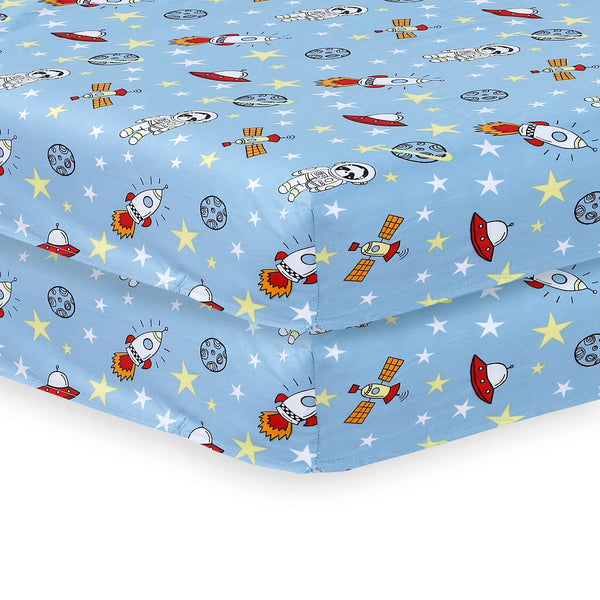
Fitted cot sheets are the most commonly purchased baby bedding item, and for good reason, they are the only sheet type recommended for safe use in a baby's sleep environment. Flat sheets are not suitable for cots, as they can become loose and pose a suffocation risk. The fitted sheet for cot or cot bed uses a fully elasticated edge that wraps completely around and underneath the mattress, holding the sheet firmly in place regardless of how much the baby moves.
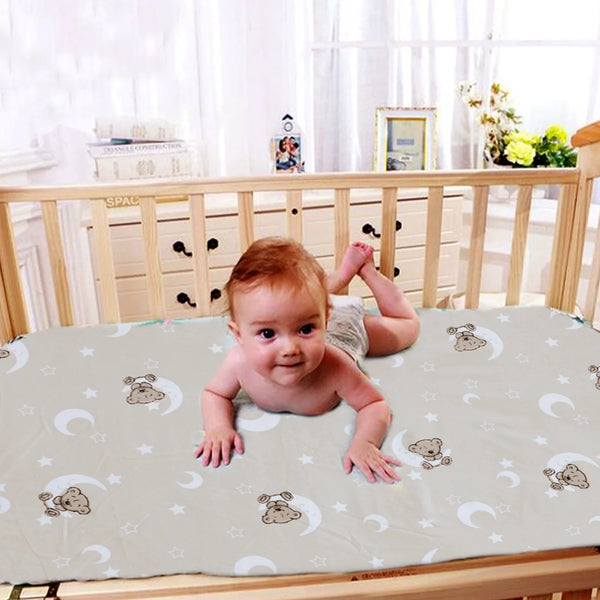
When selecting cot fitted sheets, the key measurements to match are:
- Sheet length and width: Must match the mattress dimensions as closely as possible
- Pocket depth: Must be equal to or greater than the mattress depth to allow a secure tuck
- Fabric type: Choose breathable, hypoallergenic materials such as 100% cotton, jersey cotton, or bamboo
Recommended Cot Fitted Sheet Sizes by Mattress Type
| Mattress Size | Recommended Fitted Sheet Size | Minimum Pocket Depth |
|---|---|---|
| 119cm x 59cm (Standard Cot) | 120cm x 60cm | 15cm |
| 139cm x 69cm (Standard Cot Bed) | 140cm x 70cm | 15cm |
| Travel Cot (varies) | Check manufacturer spec | 8–10cm |
At Dtex Homes, our fitted sheets for cot beds are crafted in soft, easy-care cotton fabrics with generous pocket depths to ensure a snug, safe fit on standard UK cot bed mattresses. They are available in a range of colours and patterns to complement your nursery decor.
Cot Duvet Size Guide
Choosing the right cot bed duvet size is just as important as getting the sheet right. A duvet that is too large will hang excessively over the sides of the cot bed and could pose a risk of overheating or becoming tangled. A duvet that is too small will not provide adequate coverage and may leave cold spots during the night.
The standard cot bed duvet size in the UK is typically 120cm x 150cm. This sizing provides enough coverage to tuck in securely at the sides without hanging dangerously low. For younger babies under 12 months, it is important to note that the Lullaby Trust advises against using a duvet at all — lightweight blankets are safer for newborns. Duvets are generally introduced from around 12 months of age.
UK Cot and Cot Bed Duvet Size Chart
| Bed Type | Recommended Duvet Size (cm) | Tog Rating (Guidance) |
|---|---|---|
| Standard Cot | ~100cm x 120cm | 4 tog (summer) / 7–9 tog (winter) |
| Standard Cot Bed | 120cm x 150cm | 4 tog (summer) / 7–9 tog (winter) |
| Toddler Bed (converted cot bed) | 120cm x 150cm | 4–7 tog depending on season |
The tog rating of a duvet refers to its thermal resistance — or how warm it is. For babies and toddlers, a lower tog rating is generally safer to prevent overheating. A room temperature of 16–20°C is recommended for a baby's sleep environment, according to NHS safer sleep guidelines.
Cot Quilt Size Guide
The terms cot quilt and cot duvet are often used interchangeably, but there is a subtle distinction. A cot quilt typically refers to a thinner, decorative or lightly padded covering — often used more as a comforter layer or decorative item rather than a primary warmth source. A cot duvet is the main sleep covering with a filled insert (such as hollowfibre or natural down) and a tog rating.
In terms of cot quilt size, the dimensions generally mirror those of a cot duvet. The most common cot quilt dimensions in the UK are:
UK Cot Quilt Size Reference
| Bed Type | Typical Quilt Size (cm) | Notes |
|---|---|---|
| Standard Cot | ~100cm x 120cm | Lightly padded; not for newborns under 12 months |
| Standard Cot Bed | ~120cm x 150cm | Most common size; suitable from 12 months+ |
When selecting a cot bed quilt, look for one filled with hypoallergenic material and covered in a soft, breathable fabric such as cotton percale or microfibre. Avoid quilts with heavy padding for babies under 12 months — lightweight cellular blankets remain the safer choice for younger infants.
Cot Pillowcase Size Guide
Many parents wonder whether their baby needs a pillow at all — and the short answer, for newborns and babies under 12 months, is no. Safe sleep guidance from the Lullaby Trust advises against using pillows for babies under 12 months, as they can obstruct the airway. However, once a child reaches toddler age and transitions to an open-sided toddler bed, typically around 18 months to 2 years, a small, flat pillow can be introduced safely.
The cot bed pillow is smaller than a standard adult pillow and requires its own correctly sized cot pillowcase. The standard cot pillow size in the UK is typically 40cm x 60cm, though some brands offer slightly different dimensions. Always match your pillowcase to the exact pillow dimensions to avoid excess fabric.
UK Cot Pillowcase Size Guide
| Pillow Type | Standard Pillow Size (cm) | Recommended Pillowcase Size (cm) |
|---|---|---|
| Cot / Cot Bed Toddler Pillow | 40cm x 60cm | 40cm x 60cm (or 45cm x 65cm) |
| Junior / Toddler Pillow | 40cm x 60cm | 40cm x 60cm |
Toddler Duvet Size Guide
As your child grows out of the fully enclosed cot stage and transitions to a cot bed used as a toddler bed, or moves into a dedicated toddler or junior bed, their bedding needs evolve alongside them. The toddler duvet size is slightly larger than a standard cot bed duvet, providing more coverage for an older, more active sleeper who moves around more during the night.
The most commonly used toddler duvet size in the UK is 120cm x 150cm, the same as the standard cot bed duvet size. This makes the cot bed duvet and toddler duvet essentially interchangeable for most children up to around age 4, at which point many families transition to a junior or single duvet.
Toddler and Junior Duvet Size Progression Chart
| Age Stage | Recommended Duvet Size (cm) | Bed Type |
|---|---|---|
| 12 months – 2 years | 120cm x 150cm | Cot bed (enclosed) |
| 2–4 years | 120cm x 150cm | Cot bed (converted to toddler) |
| 4–6 years | 120cm x 150cm or 150cm x 200cm | Junior bed or small single |
| 6+ years | Single (135cm x 200cm) | Standard single bed |
For a curated range of children's duvets, duvet covers, and complete cot bed bedding sets, visit the Dtex Homes children's bedding sets collection, designed to meet the sizing needs of UK babies and toddlers at every stage of growth.
International Cot Bed Size Comparison

With so many nursery furniture brands originating from Europe, Scandinavia, and the United States now available to UK parents, through retailers, online marketplaces, and international shipping, it is increasingly common to encounter cot bed dimensions that do not align with the UK standard cot bed size. Understanding how international sizing differs from the UK norm is essential to avoid buying bedding, mattresses, or fitted sheets that simply will not fit your cot bed correctly.
This section provides a clear comparison of UK, European, and US crib dimensions, along with practical guidance on whether international bedding can be used in UK cot beds.
UK Standard Cot Sizes
As established in the earlier sections of this guide, the UK standard cot bed size is 140cm x 70cm (internal dimensions), with a mattress measuring approximately 139cm x 69cm. The standard cot size UK, for a non-converting cot, is 120cm x 60cm, with a mattress of approximately 119cm x 59cm.
These two sizes, 120x60 and 140x70, account for the vast majority of baby and toddler beds sold by UK nursery furniture retailers, and virtually all UK cot bedding, including fitted cot sheets, cot duvets, and cot bed mattress protectors, is manufactured to fit one of these two sizes.
UK Standard Cot and Cot Bed Sizes at a Glance
| Bed Type | Internal Frame (cm) | Mattress Size (cm) | Standard Sheet Size (cm) |
|---|---|---|---|
| UK Standard Cot | 120 x 60 | 119 x 59 | 120 x 60 |
| UK Standard Cot Bed | 140 x 70 | 139 x 69 | 140 x 70 |
Common European Cot and Cot Bed Mattress Sizes
| Country / Brand | Common Mattress Size (cm) | UK Equivalent |
|---|---|---|
| IKEA (most cot beds) | 60 x 120 | UK Standard Cot |
| Stokke Sleepi | Oval ~73 x 50 (varies) | No direct UK equivalent |
| Leander Classic | ~70 x 140 | UK Standard Cot Bed |
| German standard (DIN 68880) | 70 x 140 | UK Standard Cot Bed |
| French standard | 60 x 120 or 70 x 140 | UK Standard Cot or Cot Bed |
If you have purchased a European cot bed, always check the brand's published mattress specifications before ordering any bedding. Using the wrong sized cot fitted sheet on a European-sized mattress can result in sheets that do not stay in place, creating a real safety concern overnight.
US Crib Mattress Measurements
American baby cots are referred to as cribs, and their sizing follows a completely different standard from both UK and European measurements. In the United States, the Consumer Product Safety Commission (CPSC) regulates crib dimensions, setting a standard crib mattress size of approximately 52 inches x 28 inches, or 132cm x 71cm in metric.
This means a US crib mattress is longer than a UK standard cot mattress (119cm) but slightly shorter than a UK standard cot bed mattress (139cm). In terms of width, the US crib mattress (71cm) is very close to the UK cot bed width (69cm), but the length mismatch makes US crib sheets incompatible with UK cot beds without modification.
US Crib vs UK Cot vs UK Cot Bed — Mattress Size Comparison
| Region / Bed Type | Mattress Length (cm) | Mattress Width (cm) | Compatible with UK Cot Bed Sheets? |
|---|---|---|---|
| UK Standard Cot | 119cm | 59cm | No — too small |
| UK Standard Cot Bed | 139cm | 69cm | Yes — this is the UK standard |
| US Standard Crib | ~132cm | ~71cm | No — different length and width |
Can International Cot Sheets Fit UK Cot Beds?
The short answer is: generally not without risk. While some international sheets may appear close in size to UK cot bed sheet dimensions, even a difference of a few centimetres can mean the sheet does not sit properly on the mattress. A sheet that is even slightly too large will have excess fabric on the sleep surface; a sheet that is slightly too small will strain at the corners and pop off during the night.
There are two scenarios where an international sheet might be considered a workable fit:
- European 70cm x 140cm sheets (matching the German DIN standard): These are dimensionally identical to the UK standard cot bed and will fit correctly.
- European 60cm x 120cm sheets: These match the UK standard cot size and will fit correctly on a standard cot but not on a cot bed.
For any other international sizing, including US, Australian, or bespoke European dimensions — always measure your mattress and compare it precisely to the sheet's stated dimensions before purchasing. At Dtex Homes, all fitted sheets for cot beds are clearly labelled with dimensions in centimetres, making it easy to confirm the right fit for your specific mattress before you buy.
How to Measure Your Cot Mattress Correctly
Buying the right cot bed sheet size always starts with one simple step: measuring your mattress accurately. It sounds straightforward, but a surprising number of parents skip this step — either assuming their cot bed is standard-sized or relying on the description printed on the cot frame's label, which reflects the external frame dimensions rather than the internal mattress area. Taking five minutes to measure your mattress correctly before purchasing any cot size bedding can save you hours of frustration and, more importantly, keep your baby safe.
Below is a step-by-step guide to measuring your cot mattress dimensions accurately, covering length, width, and depth.
Measuring Cot Mattress Length
The length of your cot mattress is measured along its longest edge — the axis that runs from the head end to the foot end of the sleeping surface. To measure accurately:
- Remove the mattress from the cot bed frame and lay it on a flat surface
- Use a rigid tape measure rather than a soft fabric tape, which can bow under tension and give an inaccurate reading
- Measure from the very edge of one end to the very edge of the other end, keeping the tape measure flat against the surface
- Record the measurement in centimetres
For a standard UK cot bed mattress, you should expect to record a length of approximately 139cm. For a standard cot mattress, the expected length is approximately 119cm. If your measurement falls outside these ranges, your cot bed may be a non-standard or European-sized model, and you should check the manufacturer's specifications before buying cot sheets or bedding.
Measuring Cot Mattress Width
The width of the mattress is the shorter measurement across the sleeping surface. Measure from one long edge to the opposite long edge, keeping the tape measure straight and perpendicular to the length measurement. Again, record this in centimetres.
For a standard UK cot bed mattress, the expected width is approximately 69cm. For a standard cot mattress, the expected width is approximately 59cm. The width measurement is particularly important for selecting the right cot fitted sheet, as the sheet must wrap around the mattress width on both sides with enough fabric to tuck securely underneath.
Quick Reference: Expected Mattress Dimensions by Bed Type
| Bed Type | Expected Length (cm) | Expected Width (cm) |
|---|---|---|
| Standard Cot | ~119cm | ~59cm |
| Standard Cot Bed | ~139cm | ~69cm |
| Crib | ~83cm | ~40cm |
Measuring Cot Mattress Depth
The depth, sometimes referred to as the height or thickness, of the mattress is the measurement from the top sleeping surface down to the base. This measurement is critical when selecting fitted cot sheets, as the elasticated pocket on the underside of the sheet must be deep enough to wrap fully beneath the mattress and hold the sheet in place without pulling tight or slipping off.
To measure the depth accurately, hold the tape measure vertically at the side of the mattress and record the distance from the top surface to the bottom. Most standard cot bed mattresses in the UK have a depth of between 8cm and 13cm. A fitted sheet with a stated pocket depth of at least 15cm will accommodate the full depth range of most UK cot mattresses with room to spare for a secure fit.
Mattress Depth vs Fitted Sheet Pocket Depth Guide
| Mattress Depth | Minimum Sheet Pocket Depth | Recommended Sheet Pocket Depth |
|---|---|---|
| Up to 8cm | 10cm | 12–15cm |
| 8–10cm | 12cm | 15cm |
| 10–13cm | 15cm | 18cm |
| 13cm+ | 18cm | 20cm+ |
How to Measure Cot Bed Sheets for the Perfect Fit
Once you have your three mattress measurements, length, width, and depth, selecting the right cot bed sheet size is a matter of simple comparison. The sheet's stated dimensions (length x width) should match or very closely approximate your mattress length and width. The pocket depth stated on the sheet should be equal to or greater than your mattress depth.
Here is a straightforward process to follow when comparing your measurements to a sheet's listed dimensions:
- Match length and width: The sheet dimensions should match your mattress dimensions within 1–2cm. A sheet listed as 140cm x 70cm is designed for a mattress measuring approximately 139cm x 69cm.
- Check pocket depth: Ensure the pocket depth listed on the sheet is at least equal to, and ideally a few centimetres greater than, your mattress depth.
- Check elastication type: Fully elasticated edges all the way around the sheet provide the most secure fit. Some budget sheets only have elastic at the corners, which can slip more easily.
- Review fabric type: Confirm the sheet is made from a breathable, hypoallergenic material suitable for baby skin, such as 100% cotton or jersey cotton.
All Dtex Homes fitted sheets for cot beds clearly state their dimensions and pocket depth on the product listing, making this comparison quick and straightforward for parents.
Common Measuring Mistakes to Avoid
Even parents who do measure their mattress before buying bedding sometimes make small but impactful errors. The following are the most common measuring mistakes, and how to avoid them:
1. Measuring the Cot Frame Instead of the Mattress
The cot frame is always slightly larger than the mattress by design, typically by 1–2cm on each side. If you measure the internal frame dimensions and buy a sheet to match, the sheet will be too large for the actual mattress. Always measure the mattress directly.
2. Using a Soft Fabric Tape Measure
Fabric tape measures can stretch and bow, giving readings that are 1–3cm off. Use a rigid metal or plastic tape measure for accurate results. If you only have a fabric tape, pull it taut against the mattress surface and double-check your reading.
3. Forgetting to Measure Depth
Many parents measure length and width but overlook mattress depth entirely. This leads to fitted sheets whose pocket depth is insufficient, causing corners to pop off repeatedly. Always record all three dimensions before purchasing.
4. Assuming All Cot Beds Are the Same Size
While UK standard cot bed dimensions of 140cm x 70cm are consistent across most mainstream brands, there are exceptions, particularly with European imports. Never assume; always measure.
5. Buying Sheets to Fit the Packaging Description, Not Your Measurements
Sheet packaging may describe a sheet as "fits standard cot bed" without specifying the exact dimensions. Always cross-reference the specific dimensions stated in the product description against your own measurements. At Dtex Homes, all products include full measurements in the product listing so you can compare directly with confidence.
6. Ignoring Shrinkage
Natural fabrics such as cotton will shrink slightly after the first wash — typically by around 3–5%. Factor this in when selecting a sheet, particularly if your mattress is at the larger end of the standard size range. Washing sheets before first use (which is recommended for hygiene) will also pre-shrink the fabric, giving you a more accurate sense of the final fitted size before placing it on the mattress.
Choosing the Perfect Cot Bed Sheets

With your cot bed dimensions measured and your size chart to hand, the next step is selecting the right type of sheet for your baby's sleep environment. Not all cot bed sheets are created equal, and the differences between sheet types, construction methods, and fabrics have a direct bearing on both safety and comfort. This section walks you through everything you need to know to choose fitted cot sheets that work perfectly for your baby, night after night.
Fitted Sheets vs Flat Sheets
The debate between fitted and flat sheets is short-lived when it comes to baby cot bedding, and the answer is unambiguous. Fitted cot sheets are the only sheet type recommended for use in a baby's cot or cot bed. Flat sheets, which are simply rectangular pieces of fabric laid over the mattress and tucked in at the sides, are not considered safe for infants because they can come loose during the night and create a suffocation or entanglement hazard.
A fitted sheet for a cot or cot bed has elastication built into the edges, either at the four corners alone, or ideally running all the way around the full perimeter of the sheet. This elastication allows the sheet to grip the underside of the mattress securely, holding it in position even when the baby rolls, kicks, or shifts position during sleep. The result is a smooth, wrinkle-free sleeping surface that cannot be dislodged by normal infant movement.
Why Flat Sheets Are Not Safe for Baby Cots
- They can come untucked and bunch up on the sleep surface
- Loose fabric near a baby's face poses a suffocation risk
- They offer no guaranteed grip on the mattress surface
- They are inconsistent with Lullaby Trust safer sleep recommendations
Why Fitted Cot Sheets Are Recommended
Beyond the safety argument, fitted cot sheets offer several practical advantages that make them the clear choice for day-to-day nursery life. They are easier to put on and take off — particularly useful during night-time sheet changes when speed and convenience matter. They stay neat and smooth without constant readjustment. And because the elasticated edge holds the sheet flat against the mattress at all times, your baby always sleeps on a firm, even surface — exactly as recommended by NHS safer sleep guidelines.
When selecting fitted sheets for cot beds, look for the following quality indicators:
- Full perimeter elastication: Elastic that runs all the way around the sheet edge — not just at the four corners — provides a significantly more secure fit
- Correct pocket depth: As discussed in the measuring section, the pocket depth must match or exceed your mattress depth
- Pre-shrunk fabric: Sheets that have been pre-shrunk in manufacturing will maintain their size and fit after washing
- Breathable material: Essential for regulating baby's temperature overnight
Elasticated Cot Sheets vs Deep-Fit Sheets
Within the category of fitted cot sheets, there is a further distinction worth understanding: standard elasticated sheets versus deep-fit sheets. A standard elasticated cot fitted sheet typically has a pocket depth of around 10–15cm and suits the majority of UK cot mattresses in the standard depth range of 8–13cm. These are the most widely available type and are suitable for most nursery setups.
Deep-fit cot sheets, sometimes called deep pocket fitted sheets, are designed for mattresses with a greater-than-average depth, typically 13cm and above. Premium cot bed mattresses with dual-sided construction (one side for infants, one side for toddlers) are often thicker than standard, and a regular fitted sheet will not have sufficient pocket depth to grip properly underneath. If your mattress is on the thicker side, a deep-fit sheet with a pocket depth of 18–25cm is the right choice.
Choosing Between Standard and Deep-Fit Cot Sheets
| Mattress Depth | Sheet Type | Recommended Pocket Depth |
|---|---|---|
| Up to 10cm | Standard fitted sheet | 12–15cm |
| 10–13cm | Standard or deep-fit | 15–18cm |
| 13cm and above | Deep-fit fitted sheet | 18–25cm |
How Many Cot Bed Sheets Do You Need?
This is one of the most practical questions new parents ask, and the answer depends on how frequently you are willing to do laundry. The reality of life with a newborn is that sheets will need changing more often than you might expect. Nappy leaks, milk spills, and general messiness mean that having a sufficient rotation of cot bed fitted sheets is not a luxury, it is a genuine necessity.
The general guidance from experienced parents and nursery specialists is to have a minimum of three to four fitted cot sheets per cot bed. This allows one on the mattress, one in the wash, and one or two in reserve for unplanned night-time changes. During the newborn stage especially, having sheets ready to go at 3am without needing to run a wash is a small but meaningful comfort.
Recommended Sheet Quantities by Stage
| Baby Stage | Recommended Number of Sheets | Reason |
|---|---|---|
| Newborn (0–3 months) | 4–5 sheets | Frequent feeding, nappy leaks, sick-ups |
| Infant (3–12 months) | 3–4 sheets | Still frequent changes but less unpredictable |
| Toddler (12 months+) | 3 sheets | Fewer accidents; standard laundry rotation |
Browse the Dtex Homes fitted sheets for cot beds collection to stock up on soft, durable cot fitted sheets in a range of colours — perfect for building a generous rotation without compromising on quality.
When Should You Replace Baby Bed Sheets?
Even high-quality cot bed sheets have a finite lifespan, particularly when laundered frequently at higher temperatures. There are several signs that it is time to replace your fitted cot sheets rather than continue washing them:
- Elastication has lost its grip: If the sheet corners are no longer holding firmly to the mattress, the elastic has worn out and the sheet is no longer safe to use
- Fabric has thinned or pilled: Pilling and thinning fabric can indicate structural weakening; a worn sheet may tear unexpectedly
- Persistent staining: While cosmetically unimportant, persistent stains can harbour bacteria even after washing at normal temperatures
- Sheet no longer fits correctly: If repeated washing has caused significant shrinkage, the sheet may no longer cover the mattress adequately
- Visible wear at seams or edges: Fraying or splitting at the seams is a clear indicator that replacement is overdue
As a general rule, replacing cot bed fitted sheets every 12–18 months of regular use is advisable, or sooner if any of the above signs appear. Quality sheets laundered carefully at the recommended temperature will typically last well within this timeframe.
Best Fabrics for Cot Bed Sheets

The fabric your baby's cot bed sheet is made from matters more than most parents initially realise. Babies spend the vast majority of their early months sleeping — up to 16–18 hours per day for newborns — which means their skin is in near-constant contact with their bedding. Choosing a fabric that is soft, breathable, hypoallergenic, and durable is one of the most impactful decisions you will make when setting up your nursery.
Below is a comprehensive breakdown of the most common cot sheet materials available to UK parents, including their benefits, limitations, and which situations they are best suited to.
100% Cotton Cot Sheets
100% cotton is the most widely recommended and most commonly used fabric for baby cot bedding — and for very good reason. Cotton is naturally breathable, allowing air to circulate through the fabric and helping to regulate your baby's body temperature during sleep. It is soft against delicate skin, easy to launder at high temperatures for thorough hygiene, and widely available at a range of price points.
Within the broad category of cotton, there are several weave types to be aware of:
Types of Cotton Weave for Cot Sheets
- Percale cotton: A crisp, tightly woven cotton with a smooth finish. Lightweight, cool, and durable. Ideal for warmer months or rooms that tend to run warm. Thread count typically 200–400.
- Sateen cotton: A lustrous, slightly silkier finish achieved through a different weave pattern. Slightly warmer than percale and softer to the touch. Well suited to cooler months.
- Jersey cotton: A knitted cotton fabric with a natural stretch, similar to the fabric used in quality T-shirts. Extremely soft, forgiving in terms of fit, and ideal for newborns with sensitive skin. Jersey fitted cot sheets are particularly easy to put on and take off.
- Brushed cotton (flannelette): A brushed finish that creates a warmer, slightly textured surface. Best suited to winter months or cooler nurseries. Not recommended for warmer environments due to reduced breathability.
For year-round use, jersey cotton or percale cotton are the most versatile choices for cot bed fitted sheets.
Egyptian Cotton Cot Bedding
For parents who want the very best in terms of softness, durability, and luxury feel for their baby's sleep environment, Egyptian cotton represents the premium end of the cot bed sheet market. Egyptian cotton is grown in the Nile Delta region of Egypt, where the unique combination of climate and soil produces extra-long staple cotton fibres. These longer fibres can be spun into finer, stronger yarn, resulting in a fabric that is noticeably softer, more lustrous, and longer-lasting than standard cotton.
Egyptian cotton cot sheets feel exceptionally smooth against baby's skin, making them an excellent choice for newborns or babies prone to eczema and skin sensitivity. They also withstand frequent laundering at high temperatures better than many other fabric types, retaining their softness and structural integrity wash after wash.
Browse the Dtex Homes Egyptian cotton cot sheets collection for a curated range of premium Egyptian cotton cot bed bedding crafted to the highest quality standards, offering the softness of luxury hotel linen in a size perfectly suited to your baby's cot bed.
Why Choose Egyptian Cotton for a Baby's Cot?
- Extra-long staple fibres create a noticeably softer, smoother fabric surface
- Highly breathable — helps regulate baby's temperature overnight
- More durable than standard cotton — withstands frequent high-temperature washing
- Hypoallergenic properties — less likely to irritate sensitive or eczema-prone skin
- Retains softness and colour vibrancy over many washes
- A genuinely worthwhile long-term investment for frequently used bedding
Organic Cotton for Sensitive Skin
Organic cotton is grown without the use of synthetic pesticides, herbicides, or fertilisers, and processed without harsh chemical bleaches or dyes. For babies with particularly sensitive skin, eczema, or allergic tendencies, organic cotton cot bedding offers an additional layer of reassurance that the fabric in contact with their skin is as pure and chemical-free as possible.
Look for certifications such as the OEKO-TEX Standard 100 or GOTS (Global Organic Textile Standard) certification when purchasing organic baby bedding. These certifications verify that the fabric has been tested for harmful substances and meets internationally recognised safety standards for textiles used in direct skin contact, particularly important for baby products.
Organic vs Standard Cotton for Baby Cot Sheets
| Feature | Standard Cotton | Organic Cotton |
|---|---|---|
| Pesticide/chemical use | May be present in processing | None — certified chemical-free |
| Skin sensitivity suitability | Generally fine for most babies | Ideal for sensitive or eczema-prone skin |
| Breathability | High | High |
| Durability | Good | Good to very good |
| Price point | Moderate | Moderate to premium |
| Certification to look for | OEKO-TEX Standard 100 | GOTS or OEKO-TEX Standard 100 |
Breathability, Thread Count, and GSM Explained
When shopping for cot bed sheets and baby bedding, you will frequently encounter terms like thread count and GSM. Understanding what these figures actually mean, and what they mean specifically for baby bedding, helps you make a more informed purchasing decision rather than simply being guided by marketing language.
What Is Thread Count in Baby Bedding?
Thread count refers to the number of threads woven into a square inch of fabric, counting both horizontal (weft) and vertical (warp) threads. A higher thread count generally indicates a finer, denser weave, but for baby bedding specifically, an extremely high thread count is not necessarily better. Very high thread count fabrics (above 600) can be less breathable than mid-range options, which is a concern in a baby's sleep environment where temperature regulation is paramount.
For cot bed sheets, a thread count of 200–400 in a percale or sateen weave strikes the ideal balance between softness, durability, and breathability. Jersey cotton sheets do not have a traditional thread count, as they are knitted rather than woven, their quality is assessed by weight (GSM) instead.
What Is GSM in Baby Bedding?
GSM stands for grams per square metre — a measure of fabric weight. In the context of cot bed sheets and baby bedding, GSM tells you how heavy and substantial the fabric is:
- 100–150 GSM: Lightweight — ideal for warm summer months or well-heated nurseries. Highly breathable but less substantial in feel.
- 150–200 GSM: Mid-weight — the most versatile range for year-round use. Balances breathability with warmth and durability.
- 200 GSM and above: Heavier weight, warmer and more substantial. Better suited to cooler rooms or winter months. May be less breathable in warmer environments.
Breathability: Why It Matters in Baby Bedding
Breathability in cot bed sheet fabric refers to how freely air can pass through the material. A breathable fabric allows heat and moisture to escape, preventing the sleep surface from becoming uncomfortably warm or damp. Overheating is one of the risk factors associated with sudden infant death syndrome (SIDS), which is why the Lullaby Trust emphasises temperature regulation as a key element of safer sleep for babies.
Natural fibres, particularly cotton, organic cotton, and bamboo, are inherently more breathable than synthetic fabrics such as polyester. When buying cot size bedding for any age of baby, prioritise natural fibre content for the best combination of comfort, safety, and skin-friendliness.
Complete Baby Bedding Buying Guide

Preparing your baby's sleep space involves more than just selecting a cot bed and a couple of sheets. A fully equipped, safe nursery requires a considered selection of bedding items, each serving a specific purpose and each needing to meet safety standards appropriate for a baby's sleep environment. This complete baby bedding buying guide covers everything you will need, from the mattress upwards, to ensure your baby's cot bed is safe, comfortable, and well-equipped from day one.
Whether you are buying for a first baby or updating your nursery for a new arrival, use this guide as your definitive baby bedding checklist.
What You'll Need for Your Baby's Cot
Setting up a safe and comfortable cot bed does not require an overwhelming quantity of items — but it does require the right items in the right quantities. The essential components of a well-prepared cot bed are:
- A firm, flat, correctly sized cot bed mattress
- A waterproof mattress protector sized to fit the mattress
- At least three to four fitted cot sheets
- Lightweight cellular blankets for newborns (in place of a duvet)
- A cot bed duvet and duvet cover (for babies 12 months and older)
- A cot bed pillow and pillowcase (for toddlers 18 months and older)
Items such as cot bumpers, sleep positioners, and loose decorative cushions should not be placed in a baby's cot, these are consistently flagged as unsafe sleep hazards by organisations including the Lullaby Trust and the NHS.
Cot Mattress Protector
A cot mattress protector sits between the mattress and the fitted sheet, providing a protective barrier against moisture, bacteria, and general wear. Given how frequently babies leak, whether from nappies, feeding, or general baby-related mishaps, a good quality mattress protector is one of the most practical investments you can make for your nursery.
The cot mattress protector should match the dimensions of your mattress exactly, the same size as your cot fitted sheet. For a standard UK cot bed mattress, this means a protector sized 140cm x 70cm. For a standard cot, the size will be 120cm x 60cm.
Types of Cot Mattress Protector
- Waterproof fitted protector: Fits over the mattress like a fitted sheet with a waterproof layer bonded to the underside. The most common and recommended type for everyday use.
- Flat waterproof undersheet: A flat waterproof sheet placed between the mattress and the fitted sheet. Less secure than a fitted version but useful as a backup layer.
- Quilted mattress protector: Adds a layer of padding as well as protection. Useful for older mattresses but adds depth, factor this in when selecting fitted cot sheet pocket depth.
Fitted Cot Sheets
As covered in detail in the previous section, fitted cot sheets are the cornerstone of your baby's bedding setup. They must be correctly sized to the mattress, made from breathable natural fabric, and have sufficient pocket depth to stay securely in place. Stock a minimum of three to four fitted sheets per cot bed to allow for a smooth daily and emergency laundry rotation.
For a comprehensive range of high-quality fitted sheets for cot beds in soft cotton and jersey fabrics, visit Dtex Homes' fitted sheets for cot beds collection, available in a variety of colours and patterns to complement any nursery theme.
Cot Bedding Sets
For parents who prefer a coordinated nursery aesthetic — or who simply want to buy everything they need in one purchase — a cot bedding set is an excellent option. A typical cot bed bedding set includes a duvet cover and one or two pillowcases, with some sets also including a fitted sheet. They are available in a vast range of designs, from neutral palettes to bold nursery prints, making it easy to create a cohesive look in your baby's room.
When purchasing a cot set bedding package, always verify that the dimensions of each included item match your specific cot bed mattress size. Not all bedding sets are sized for UK standard cot bed dimensions — particularly if the set originates from a European or US brand. Browse the Dtex Homes children's bedding sets collection for a curated range of cot bed bedding sets designed specifically for UK standard sizing.
What to Check Before Buying a Cot Bedding Set
- Confirm the duvet cover dimensions match your cot bed duvet size
- Check whether a fitted sheet is included or needs to be purchased separately
- Verify the pillowcase size matches any cot pillow you have or plan to buy
- Check the fabric composition — look for natural fibres such as cotton
- Confirm the set is machine washable at 40°C or above for effective hygiene
Cot Quilts
A cot quilt is a lightly padded, decorative covering that can serve as a lightweight top layer for older babies and toddlers. As discussed earlier in the size guide section, cot quilts are not recommended for babies under 12 months, cellular blankets are the safer alternative for newborns and young infants. From 12 months onwards, a lightweight cot bed quilt can be a lovely addition to the nursery, adding warmth and visual interest without the bulk of a full duvet.
The standard cot quilt size for a UK cot bed is approximately 120cm x 150cm. Look for quilts filled with hypoallergenic hollowfibre or natural cotton wadding, covered in a soft, breathable cotton outer, and always ensure the quilt can be machine washed at a sufficiently high temperature to maintain hygiene.
Cot Duvets
A cot bed duvet provides the primary warmth layer for babies and toddlers aged 12 months and over. As noted previously, the standard cot bed duvet size in the UK is 120cm x 150cm. When selecting a duvet, consider both the tog rating and the fill material:
Cot Bed Duvet Fill Types
- Hollowfibre: A synthetic fill that is hypoallergenic, lightweight, and machine washable. The most practical and widely used option for baby duvets.
- Microfibre: A finer synthetic fill with a slightly softer feel. Also hypoallergenic and easy to launder.
- Natural down: Exceptionally soft and warm, but not always recommended for babies due to potential allergen concerns and more complex care requirements.
- Organic cotton fill: A natural, hypoallergenic alternative well-suited to sensitive babies. Breathable and chemical-free.
For everyday use, a 4 tog cot bed duvet is recommended for summer months and a 7–9 tog for winter, in line with the room temperature guidance of 16–20°C recommended by the NHS. Some families opt for two duvets of different tog ratings and switch seasonally.
Pillowcases and When to Introduce a Pillow
Pillows and pillowcases are the final addition to a complete cot bed bedding setup, but they are also the item that should be introduced last, once your child is developmentally ready. As confirmed by NHS guidance and the Lullaby Trust, pillows should not be introduced until a baby is at least 12 months old, and most experts recommend waiting until the toddler stage, typically around 18 months to 2 years, when the child has sufficient motor control and awareness to reposition themselves freely during sleep.
When the time is right to introduce a pillow, opt for a small, firm toddler or cot bed pillow, not an adult-sized pillow, which is too large and too soft for a young child. The standard cot bed pillow size is 40cm x 60cm, and cot pillowcases should be purchased to match this exact dimension. A pillowcase that is too large will have excess fabric, exactly the kind of loose bedding that should be kept away from a young child's face.
Pillow Introduction Timeline
| Age | Pillow Recommendation |
|---|---|
| 0–12 months | No pillow — flat, firm mattress surface only |
| 12–18 months | Optional — small, firm toddler pillow if transitioning to open cot bed |
| 18 months – 4 years | Small, firm cot bed pillow (40cm x 60cm) recommended |
| 4 years+ | Junior or standard pillow appropriate |
Waterproof Mattress Protectors
A waterproof mattress protector deserves its own section here because it is, arguably, one of the most hardworking items in your entire nursery setup. A quality waterproof cot mattress protector shields the mattress from the inevitable leaks, spills, and accidents of early childhood — extending the usable life of the mattress significantly and maintaining a hygienic sleep surface for your baby at all times.
There are several features to look for in a waterproof mattress protector for a cot bed:
Key Features of a Quality Waterproof Cot Mattress Protector
- Fully waterproof barrier: The protector must have a reliable waterproof layer — typically a bonded polyurethane membrane — that prevents any moisture from reaching the mattress beneath
- Breathable top layer: The sleep-facing surface should be breathable to avoid heat build-up. Look for a cotton or terry towelling top surface rather than a fully plastic feel
- Correct sizing: Must match your mattress dimensions exactly — 140cm x 70cm for a standard UK cot bed mattress or 120cm x 60cm for a standard cot
- Fitted design: A fitted protector with elasticated edges that wrap underneath the mattress is more secure than a flat version placed on top
- Machine washable at 60°C: High-temperature washing is essential for effective bacteria and allergen removal in a baby's sleep environment
- Quick-drying fabric: Given how frequently protectors need to be washed, a fabric that dries quickly is a significant practical advantage
Keep at least two waterproof mattress protectors in rotation — one on the mattress and one clean and ready to go. During the newborn and early infant stage, having an immediate replacement available means you can change the bedding quickly at night without waiting for a wash cycle to complete.
For a complete nursery bedding setup — from fitted cot sheets and Egyptian cotton cot bedding to full cot bed bedding sets — explore the full Dtex Homes children's bedding collection. All products are designed to meet UK standard cot bed sizing and are crafted from quality fabrics that combine comfort, safety, and practicality for everyday nursery life.
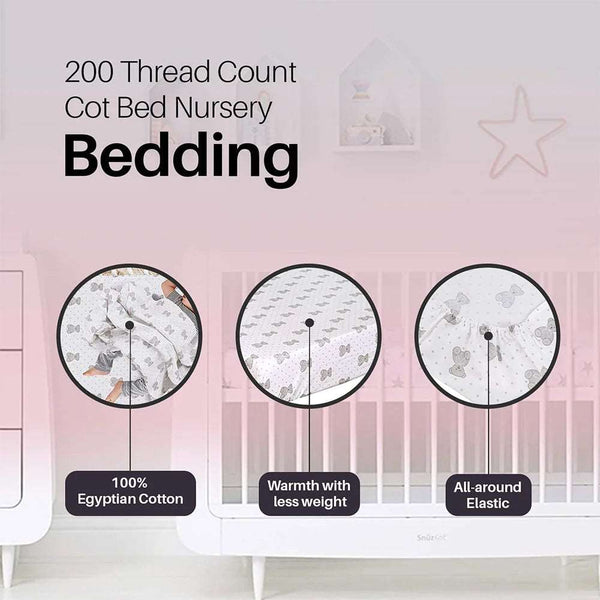
Choosing the Right Children's Duvet and Duvet Cover

Once your baby reaches the appropriate age to transition away from cellular blankets, selecting the right cot bed duvet and duvet cover becomes one of the most important bedding decisions you will make. The right duvet provides warmth, comfort, and a safe sleep environment, but only if it is the correct size, the correct tog rating, and introduced at the right time. This section covers everything UK parents need to know about cot bed duvet sizes, toddler duvet dimensions, and how to choose a duvet cover that fits correctly and safely.
What Size Duvet Fits a Cot Bed?
The size of duvet that fits a standard UK cot bed is determined by the internal dimensions of the cot bed frame and the size of the sleeping area. A duvet that is too large will hang excessively over the sides and create a risk of the child becoming tangled or overheated. A duvet that is too small will not provide adequate coverage and may leave cold gaps during the night.
For a standard UK cot bed with internal dimensions of 140cm x 70cm, the recommended duvet size is 120cm x 150cm. This provides sufficient coverage of the sleeping surface with a modest overhang on each side, enough for warmth without creating a safety hazard. This sizing is consistent across most UK nursery bedding brands and is the standard used by Dtex Homes for all cot bed duvet covers and cot bed bedding sets.
Quick Reference: Cot Bed Duvet Size by Bed Type
| Bed Type | Internal Dimensions | Recommended Duvet Size |
|---|---|---|
| Standard Cot | 120cm x 60cm | ~100cm x 120cm |
| Standard Cot Bed | 140cm x 70cm | 120cm x 150cm |
| Cot Bed (as toddler bed) | 140cm x 70cm | 120cm x 150cm |
| Junior Bed | ~160cm x 80cm | 120cm x 150cm or 150cm x 200cm |
Standard Cot Bed Duvet Dimensions
The standard cot bed duvet dimensions used across the UK market are 120cm x 150cm. This is the measurement of the duvet itself, not the duvet cover, which will be very slightly larger to allow the duvet to sit comfortably inside without bunching. Understanding this distinction matters when purchasing a cot bed duvet cover separately from the duvet insert, as the cover dimensions need to correspond correctly to the duvet they will enclose.
When comparing cot bed duvet measurements across different brands, be aware that minor variations exist. Some manufacturers produce duvets measuring 100cm x 135cm or 120cm x 120cm and market them as cot bed duvets, these are technically suitable for a standard cot rather than a cot bed. Always check the stated dimensions against the standard cot bed duvet size of 120cm x 150cm before purchasing.
Cot Bed Duvet Dimensions at a Glance
| Measurement | Standard Cot Bed Duvet | Standard Cot Duvet |
|---|---|---|
| Width | 120cm | ~100cm |
| Length | 150cm | ~120cm |
| Recommended cover size | 120cm x 150cm | ~100cm x 120cm |
Toddler Duvet Sizes Explained
The toddler duvet size in the UK is typically the same as the cot bed duvet size — 120cm x 150cm. This makes the transition from a fully enclosed cot bed to an open-sided toddler bed seamless from a bedding perspective, as the same duvet and cover set can continue to be used without replacement. This is one of the practical advantages of investing in a cot bed rather than a standard cot, the continuity of bedding from infancy through to the toddler years represents genuine value for money.
As your child grows beyond the cot bed stage, typically from around age 4, the natural progression is to a junior duvet, which is sized at approximately 120cm x 150cm to 150cm x 200cm depending on the brand. From there, the next step is a standard UK single duvet at 135cm x 200cm, which most children transition to between the ages of 5 and 7.
Duvet Size Progression from Baby to Child
| Age Stage | Duvet Size | Bed Type |
|---|---|---|
| Under 12 months | No duvet — use cellular blankets | Cot or cot bed |
| 12 months – 4 years | 120cm x 150cm | Cot bed |
| 4–6 years | 120cm x 150cm or junior size | Junior or small single bed |
| 6 years+ | 135cm x 200cm (single) | Standard single bed |
Cot Bed Duvet Cover Size Guide
A cot bed duvet cover should be very slightly larger than the duvet it contains — typically by around 5–10cm in each dimension — to allow the duvet to sit smoothly inside the cover without pulling, bunching, or leaving the corners unfilled. For a standard cot bed duvet measuring 120cm x 150cm, a cover measuring approximately 120cm x 150cm to 125cm x 155cm is ideal.
When purchasing a cot bed duvet cover as part of a cot bed bedding set, always confirm that the set includes a cover specifically sized for a cot bed duvet rather than a standard cot duvet. The difference in dimensions between the two is significant enough that a cover designed for a smaller cot duvet will leave the cot bed duvet cramped and bunched inside — creating an uneven sleeping surface and a less comfortable result for your child.
Browse the full range of cot bed duvet covers and coordinated children's bedding sets at Dtex Homes' children's bedding sets collection — all sized to UK standard cot bed dimensions and available in a wide range of designs.
When Is It Safe to Introduce a Duvet?
This question is one that every parent asks — and the answer from all leading UK child health authorities is consistent: duvets should not be introduced until a baby is at least 12 months old. Before this age, the risk of overheating and the inability of a young baby to push bedding away from their face makes duvets genuinely unsafe in a cot environment.
For babies under 12 months, the recommended alternative is lightweight cellular blankets — thin, open-weave blankets that provide warmth while allowing air to circulate freely. These can be layered according to room temperature and are easily pushed aside by even a young baby if they become too warm. The Lullaby Trust's bedding guidance recommends tucking blankets firmly under the mattress at shoulder height rather than placing them loosely over the baby.
Safe Bedding Timeline for Babies and Toddlers
| Age | Recommended Bedding | Items to Avoid |
|---|---|---|
| 0–6 months | Firm mattress, fitted sheet, cellular blanket | Duvets, pillows, bumpers, loose items |
| 6–12 months | Firm mattress, fitted sheet, cellular blanket or baby sleeping bag | Duvets, pillows, loose blankets |
| 12 months+ | Fitted sheet, lightweight duvet (4 tog) | Adult pillows, heavy duvets, bumpers |
| 18 months+ | Fitted sheet, duvet, small flat toddler pillow | Adult-sized pillows, very high tog duvets |
Choosing the Right TOG Rating
The tog rating of a duvet is a measure of its thermal resistance — how well it retains heat. For babies and toddlers, choosing the correct tog is a matter of both comfort and safety. An excessively warm duvet in a heated nursery can cause overheating, which is associated with an increased risk of SIDS. Conversely, a duvet that is too light for the room temperature will leave a child cold and unsettled during the night.
The NHS recommends keeping a baby's room at between 16°C and 20°C, with 18°C considered the ideal sleep temperature. At this room temperature, the following tog guidance applies for children aged 12 months and over:
TOG Rating Guide for Cot Bed Duvets
| Room Temperature | Recommended TOG Rating | Season (Typical) |
|---|---|---|
| Above 24°C | 1–2 tog | Hot summer |
| 21–24°C | 2.5–4 tog | Warm summer |
| 17–20°C | 4–7 tog | Spring / Autumn |
| Below 17°C | 9–10.5 tog | Winter |
Many UK families find it practical to keep two cot bed duvets, a 4 tog for warmer months and a 9 tog for winter — and switch between them seasonally. This approach is more cost-effective and safer than relying on a single all-seasons duvet throughout the year.
Cot Bed Safety Essentials Every Parent Should Know

No guide to cot bed sheet sizes and baby bedding would be complete without a thorough section on safety. The sleep environment you create for your baby has a direct and measurable impact on their safety — and understanding the specific risks associated with incorrect bedding, poor mattress fit, and unsafe sleep practices is essential knowledge for every parent and caregiver. This section brings together the most important safe sleep guidance from leading UK health authorities, tailored specifically to the cot bed environment.
Safe Sleep Recommendations
The cornerstone of infant sleep safety in the UK is the guidance provided by the Lullaby Trust and the NHS, both of whom publish comprehensive safer sleep advice for parents of babies and young children. The headline recommendations, as they relate to cot bed bedding and the sleep environment, are:
- Always place your baby on their back to sleep — this is the single most important action to reduce the risk of SIDS
- Use a firm, flat, waterproof mattress that fits the cot bed frame snugly with no significant gaps at the sides
- Keep the cot free from loose items — no pillows, duvets, bumpers, or soft toys for babies under 12 months
- Use only fitted sheets on the cot mattress — never flat sheets or loose fabric
- Keep the nursery at 16–20°C to prevent overheating
- Do not smoke in the same room as the baby or near their sleep environment
- Keep the cot in your room for the first six months of life, following NHS guidelines
Why Mattress Fit Is Essential
The fit of the cot bed mattress within the cot frame is a safety issue that is frequently overlooked in favour of aesthetic considerations. According to the Lullaby Trust's guidance on cots and mattresses, the gap between the mattress and the cot sides should be no more than 4cm. Any gap larger than this creates a risk of entrapment — where a baby's limbs, or in more serious cases their head or neck, could become lodged between the mattress and the cot frame.
This is why buying a replacement cot bed mattress requires careful measurement of your specific cot frame's internal dimensions, rather than simply purchasing any mattress labelled as a standard cot bed mattress size. While most UK cot beds follow the 140cm x 70cm standard, manufacturing tolerances mean that a mattress from one brand may not fit perfectly in a cot frame from another.
Mattress Fit Safety Checklist
- Gap between mattress and cot sides should be no more than 4cm
- Mattress should not be forced into the frame — if it requires forcing, it is too large
- Mattress should not move significantly when pushed — if it slides, it may be too small
- The mattress surface should be firm and flat — no sagging or indentations
- Replace the mattress if it shows signs of wear, sagging, or damage
Baby Bedding Items to Avoid
Certain bedding items and sleep accessories that might appear harmless — or are even actively marketed for baby use — are considered unsafe by UK child health authorities. Being aware of these items and keeping them out of your baby's sleep environment is a straightforward but critical step in reducing sleep-related risk.
Items That Should Not Be Placed in a Baby's Cot
- Cot bumpers: Padded bumpers tied around the inside of cot bars may appear protective, but they pose a serious entrapment and suffocation risk and are strongly advised against by the Lullaby Trust and NHS
- Pillows (under 12 months): Too soft and too large for safe infant use — can obstruct the airway
- Duvets (under 12 months): Too warm and too heavy — risk of overheating and suffocation
- Soft toys and comfort objects: Not recommended in the cot during the first 12 months due to suffocation risk
- Loose blankets: Can cover the baby's face during sleep — use fitted cellular blankets tucked under the mattress at shoulder height instead
- Sleep positioners and wedges: Not recommended — babies should sleep on a flat, firm surface without positioning devices
- Fleece or heavy fabric blankets: These reduce breathability and increase overheating risk significantly
Reducing Suffocation Risks
Suffocation risk in a baby's sleep environment is directly linked to the presence of loose, soft, or incorrectly sized bedding. The steps below represent the most effective actions parents can take to reduce suffocation risk through correct cot bed bedding choices:
- Always use a correctly sized fitted sheet with sufficient pocket depth — a sheet that pops off the mattress creates immediate loose fabric danger
- Ensure the cot bed duvet (for children 12 months+) is the correct size and not excessively large
- Never use pillows, duvets, or quilts for babies under 12 months — use cellular blankets tucked firmly under the mattress at shoulder height
- Check that fitted sheets and mattress protectors are fully secured before placing the baby in the cot
- Consider using a baby sleeping bag (also called a sleep sack) as an alternative to blankets — these zip around the baby and cannot ride up over the face
Cot Bed Safety Standards in the UK
All cot beds sold in the UK must comply with specific British and European safety standards that govern their design, construction, and materials. The primary standard applicable to cot beds is BS EN 716 for children's cots and folding cots, and BS EN 1130 for cots for domestic use. These standards regulate critical safety features including bar spacing, structural integrity, mattress support base strength, and the use of safe materials throughout.
When purchasing a new cot bed, look for explicit confirmation that the product meets these standards — reputable UK nursery furniture brands will always state their compliance clearly in product documentation. If purchasing second-hand, verify that the cot bed was manufactured to UK or European safety standards and check for any product recalls using the UK Government's product safety recall register.
UK Cot Bed Safety Standards Overview
| Standard | What It Covers |
|---|---|
| BS EN 716 | Children's cots and folding cots — dimensions, structural strength, bar spacing |
| BS EN 1130 | Cots for domestic use — safety requirements and test methods |
| BS EN 16890 | Children's products — general safety requirements |
| REACH regulations | Restricts use of hazardous chemicals in materials used in baby products |
Safe Sleeping Position for Babies
The safe sleeping position for babies is firmly established by UK health guidance: always place your baby on their back to sleep, for every sleep, day and night, from birth. This position, known as the supine position, has been shown to significantly reduce the risk of sudden infant death syndrome (SIDS). The Lullaby Trust's research confirms that the back-sleeping position is the safest for babies until they are able to roll over independently.
Once a baby can roll from back to front and front to back unassisted, typically from around 4 to 6 months, it is generally considered safe to allow them to find their own comfortable sleep position. However, they should always be placed on their back initially. The correct cot bed bedding setup supports this safe sleeping position by ensuring a firm, flat, unobstructed sleeping surface with no loose items that could impede the baby's position or breathing.
How to Buy the Best Cot or Cot Bed

With the safety fundamentals covered, the next practical question for many parents is how to choose the right cot bed in the first place. The market for baby cots and cot beds in the UK is extensive, spanning a wide range of price points, designs, materials, and features. Knowing what actually matters — versus what is purely aesthetic — will help you make a confident, well-informed purchase that serves your baby safely from newborn through to their toddler years.
Features to Look for Before Buying
Not all cot beds are built equally, and the features that genuinely matter for safety and usability are sometimes different from the features that are most prominently marketed. Before purchasing any cot bed, evaluate it against the following criteria:
- Safety certification: Confirm compliance with BS EN 716 or BS EN 1130 standards
- Bar spacing: Slats should be spaced between 45mm and 65mm apart — too narrow risks trapping limbs, too wide risks entrapment of the head
- Structural integrity: All joints, screws, and connections should feel solid with no movement or creaking
- Adjustable mattress base: Multiple height positions allow you to lower the mattress as the baby grows and becomes more mobile
- Convertibility: A cot bed that converts to a toddler bed offers better long-term value
- Mattress compatibility: Confirm the internal dimensions clearly so you can purchase the correct cot bed mattress size and cot bed sheet size
- Material quality: Solid wood or high-grade engineered wood construction is preferable to low-quality chipboard
Adjustable Mattress Heights
One of the most practically valuable features of a quality cot bed is an adjustable mattress base with multiple height positions. Most mainstream UK cot beds offer two or three height settings, allowing you to start with the mattress at its highest position when your baby is a newborn, making it easier to lift and lower them without excessive bending, and then lower the base progressively as the baby grows, becomes more mobile, and starts pulling themselves upright.
Lowering the mattress base is an important safety step: once a baby can pull themselves to standing, a mattress set at its highest position creates a risk of the baby toppling over the cot side. Most manufacturers provide guidance on when to lower each height position based on developmental milestones rather than age alone. When the mattress is at its lowest position, the distance from the top of the mattress to the top of the cot side should be sufficient to prevent the child from climbing out, typically at least 50cm.
Fixed vs Convertible Cot Beds
A fixed cot bed is a standard enclosed cot bed that does not convert — it serves as a cot for the infant stage and is then replaced when the child outgrows it. A convertible cot bed has removable side panels that allow it to be reconfigured into an open-sided toddler bed, and in some cases into a junior bed or sofa frame as the child grows further.
Fixed vs Convertible Cot Bed — Comparison
| Feature | Fixed Cot Bed | Convertible Cot Bed |
|---|---|---|
| Usable age range | 0–4 years (cot stage only) | 0–6+ years (cot and toddler/junior bed) |
| Long-term value | Lower — requires replacement | Higher — grows with the child |
| Initial cost | Generally lower | Generally higher |
| Bedding continuity | May need new bedding when replacing | Same cot bed sheet size throughout |
| Space consideration | Fixed footprint | May have larger footprint when converted |
Best Cot Beds for Small Nurseries
Space is a genuine constraint in many UK homes, and for parents working with a smaller nursery or a shared room setup, the footprint of the cot bed is an important purchasing consideration. Several options are available for compact nurseries:
- Compact cot beds: Some manufacturers produce cot beds with a slightly reduced external footprint while maintaining the standard internal cot bed dimensions — meaning you do not compromise on mattress or bedding size
- Mini cot beds: Smaller than standard but still larger than a crib, these offer a middle ground for space-restricted rooms — note that mini cot bed sheet sizes will differ from standard and you will need to measure carefully
- Side-sleeping cot beds: These attach to the side of the parents' bed with one open side, ideal for the first 6 months in a small bedroom
- Foldable travel cots: Not a long-term solution, but useful as a secondary sleep space in a limited environment
What Makes a Good Cot Bed?
Ultimately, the best cot bed is one that is safe, correctly sized, well constructed, and suited to your specific nursery and lifestyle needs. It should carry the relevant UK safety certification, have a mattress base that adjusts to at least two height positions, and have internal dimensions that correspond to the standard UK cot bed size of 140cm x 70cm. ensuring you can easily source the correct cot bed mattress, cot fitted sheets, and cot bed bedding sets without custom ordering.
How to Choose the Right Cot Mattress

The cot bed mattress is arguably the single most important item in your baby's sleep environment. Everything else, the fitted cot sheets, the mattress protector, the duvet, sits on top of the mattress, but it is the mattress itself that forms the foundation of a safe and comfortable sleep surface. A good quality, correctly fitted cot mattress that meets current UK safety standards will outlast many of the other items in your nursery and provide consistent support for your baby from newborn through to toddler age.
Foam vs Pocket Spring Mattresses
The two primary cot mattress types available in the UK market are foam mattresses and pocket spring mattresses. Each has distinct characteristics in terms of support, breathability, weight, and price.
Foam Cot Mattresses
Foam cot mattresses are the most widely used type in UK nurseries. They are typically made from high-density polyurethane foam, which provides a firm, flat sleeping surface — exactly what safe sleep guidelines require. Foam mattresses are lightweight (making them easy to remove for cleaning), relatively affordable, and available in a wide range of sizes including both standard cot and standard cot bed dimensions.
Higher-quality foam mattresses may incorporate open-cell foam or reflex foam — denser, more durable versions that retain their shape and firmness over a longer period. Look for a foam density of at least 25kg/m³ for a cot mattress — lower density foams will compress more quickly and lose their supportive properties.
Pocket Spring Cot Mattresses
Pocket spring cot mattresses contain individual springs encased in fabric pockets, providing a more responsive and supportive sleep surface than foam alone. They tend to be more breathable than solid foam mattresses, as air can circulate more freely through the spring structure. They are generally heavier and more expensive than foam options but are considered by many nursery specialists to offer superior long-term support and durability.
Breathable Cot Mattresses
Breathable cot mattresses are specifically designed to allow air to flow through the mattress structure, reducing the risk of CO₂ rebreathing if a baby's face comes into contact with the mattress surface. Brands such as Airflow and Breathe-Eze manufacture mattresses with an open-weave, mesh-like structure that allows air to pass freely in all directions.
While the Lullaby Trust notes that breathable mattresses have not been definitively proven to reduce SIDS risk compared to standard firm mattresses, they acknowledge that many parents choose them for added peace of mind. If you opt for a breathable mattress, ensure it still meets the fundamental requirement of being firm and flat, softness in a breathable mattress does not make it safer.
Waterproof Mattress Options
Many cot bed mattresses come with a built-in waterproof cover on one or both sides — a practical feature that makes the mattress easier to wipe clean and protects the internal materials from moisture damage. However, the presence of a waterproof cover on the mattress itself does not eliminate the need for a separate waterproof mattress protector placed between the mattress and the fitted sheet. The mattress protector provides a washable barrier layer that can be removed and laundered independently, keeping the mattress itself clean and hygienic over the long term.
Some premium cot bed mattresses are dual-sided — with a softer side for toddlers and a firmer side for infants. If you have a dual-sided mattress, ensure that it is positioned with the correct side facing up for your baby's current age and developmental stage, as specified by the manufacturer.
Firmness Recommendations
All UK and European safe sleep guidance is unambiguous on this point: a baby's mattress must be firm and flat. A soft mattress — regardless of how comfortable it might seem — poses a genuine suffocation risk for babies, as their heads can sink into a soft surface and compromise their airway. The firmness requirement applies throughout the infant stage, from newborn to 12 months.
To test a cot mattress for appropriate firmness, press the centre of the mattress firmly with your hand and release — the mattress should spring back immediately to its original flat shape with no lasting indentation. If the mattress retains a handprint or sinks noticeably under hand pressure, it is too soft for safe infant use and should be replaced.
Mattress Firmness Test at Home
- Press firmly in the centre of the mattress with the flat of your hand
- Release and observe — the mattress should return to flat immediately
- If a lasting indentation remains, the mattress is too soft — replace it
- Check the edges too — they should be firm with no collapsing
- Repeat this test periodically as the mattress ages, particularly after 2–3 years of use
Mattress Certifications to Look For
When purchasing a cot bed mattress in the UK, several certifications and accreditations provide meaningful assurance of quality and safety:
- BS EN 16890: The European standard for children's products — confirms the mattress meets general safety requirements for items used by babies and young children
- OEKO-TEX Standard 100: Confirms that all materials and components of the mattress have been tested for harmful substances — particularly relevant for the cover fabrics in direct contact with baby's skin
- CertiPUR (for foam mattresses): An international certification for foam that confirms it has been manufactured without ozone depleters, certain flame retardants, heavy metals, or other harmful substances
- The Lullaby Trust Approved: Some UK mattress brands carry endorsement or approval from the Lullaby Trust, signifying that their products align with current safer sleep recommendations
- British Standards Institution (BSI) Kitemark: A widely recognised mark of product quality and safety compliance in the UK
When in doubt about any cot mattress product, contact the manufacturer directly and ask for documentation of their safety certifications. A reputable brand will always be able to provide this information clearly and promptly.
For further guidance on setting up a complete, safe, and comfortable baby sleep environment — from the right cot bed mattress size to fitted cot sheets, duvet covers, and full cot bed bedding sets — explore the complete Dtex Homes children's bedding collection, where every product is designed to meet UK standard cot bed dimensions and crafted from quality fabrics that balance safety, comfort, and everyday practicality.
Caring for Cot Bed Sheets and Baby Bedding

Buying the right cot bed sheets and baby bedding is only half the equation — caring for them correctly ensures they remain safe, hygienic, and comfortable for as long as possible. Baby bedding is laundered far more frequently than adult bedding, which means the quality of your washing and drying routine directly affects how long your fitted cot sheets, duvet covers, and mattress protectors retain their size, softness, and structural integrity. This section covers everything you need to know about maintaining your cot bed bedding to the highest standard.
Washing New Cot Sheets Before First Use
One of the most important — and most frequently overlooked — steps in preparing your baby's sleep environment is washing all new cot bed sheets and bedding items before they are used for the first time. New textiles, including baby cot bedding, can carry residual manufacturing chemicals, fabric finishes, dyes, and dust from storage and transportation. For a newborn with sensitive skin, exposure to these residues can cause irritation, redness, or allergic reactions — all of which are entirely preventable with a simple pre-wash.
Washing new cot fitted sheets before first use also serves a practical purpose: it pre-shrinks the fabric, meaning the sheet will fit your cot bed mattress in its final washed state rather than fitting perfectly on day one and then shrinking to an unusable size after the first laundry cycle. This is particularly important for natural fabrics such as 100% cotton and jersey cotton, which can shrink by up to 3–5% after initial washing.
Pre-Wash Checklist for New Baby Bedding
- Wash all fitted cot sheets, duvet covers, pillowcases, and mattress protectors before first use
- Follow the care label instructions on each item — do not exceed the recommended temperature
- Use a gentle, fragrance-free, non-biological detergent formulated for baby or sensitive skin
- Avoid fabric softeners on the first wash — they can coat fibres and reduce breathability
- Check the fit of sheets on the mattress after the first wash to confirm they still sit correctly
Recommended Washing Temperature
The washing temperature for cot bed sheets and baby bedding involves balancing two competing priorities: hygiene (which benefits from higher temperatures) and fabric preservation (which benefits from lower temperatures). For everyday washing of fitted cot sheets that are not soiled, a temperature of 40°C is sufficient to remove general dirt, skin cells, and light staining while preserving the fabric and elastication.
For sheets and bedding that have been soiled by nappy leaks, milk, or vomit, a wash at 60°C is recommended to ensure effective bacterial elimination. Be aware that repeated washing at 60°C will cause more rapid wear on cotton fabrics and elastication than washing at 40°C — so reserve higher temperatures for genuinely soiled items rather than using them as standard practice. Always check the care label before increasing the wash temperature, as some fabrics and waterproof components have maximum temperature restrictions.
Washing Temperature Guide for Baby Bedding
| Bedding Item | Everyday Wash Temp | When Soiled | Notes |
|---|---|---|---|
| Fitted cot sheets (cotton) | 40°C | 60°C | Check care label; avoid biological detergents for sensitive skin |
| Duvet covers | 40°C | 60°C | Wash separately from heavy items to preserve fabric |
| Cot bed duvets | 40°C (if machine washable) | 40–60°C | Check fill type — some duvets require professional cleaning |
| Waterproof mattress protectors | 40°C | 60°C | Do not tumble dry on high heat — damages waterproof membrane |
| Cellular blankets | 40°C | 60°C | Open weave structure dries quickly — ideal for frequent washing |
| Egyptian cotton cot sheets | 40°C | 40°C max recommended | Higher temps may cause shrinkage in premium cotton; use gentle cycle |
Drying and Storage Tips
How you dry and store cot bed sheets and baby bedding is just as important as how you wash them. Incorrect drying can cause unnecessary shrinkage, damage to elastication, and — in the case of waterproof protectors — permanent damage to the waterproof membrane that renders the protector ineffective.
Drying Baby Bedding Correctly
- Air drying is always preferable for natural cotton fabrics — it preserves fibre integrity, prevents excessive shrinkage, and is gentler on elastication than tumble drying
- If tumble drying, use a low or medium heat setting — high heat causes significant shrinkage in cotton and can damage elasticated edges
- Waterproof mattress protectors should never be tumble dried on high heat — the heat can delaminate or crack the waterproof membrane, making it ineffective. Air dry or tumble on the lowest heat setting only
- Dry bedding thoroughly before folding and storing — even slightly damp bedding stored in a cupboard can develop mildew, which is harmful to baby's health
- Shake out duvet covers and fitted sheets before drying to prevent them balling up in the tumble dryer, which leads to uneven drying and creasing
- Allow cot bed duvets to air out periodically even when not being washed — lay them flat in a well-ventilated room to freshen the fill and maintain loft
Storing Clean Baby Bedding
- Store clean cot bed sheets in a cool, dry, well-ventilated location — avoid damp cupboards or airing cupboards that do not circulate air effectively
- Fold sheets neatly and store them flat — this reduces creasing and makes it easy to grab a clean sheet quickly during night-time changes
- Keep spare bedding in a dedicated drawer or shelf in the nursery for easy overnight access
- Do not store bedding in plastic bags long-term — this traps moisture and can cause yellowing or mildew in natural fabrics
- Use breathable cotton storage bags for seasonal bedding items such as heavier winter cot bed duvets
Removing Common Baby Stains
Parents of newborns quickly become familiar with a range of challenging stains — from milk and formula to nappy leaks and weaning food. Acting quickly when stains occur significantly improves the likelihood of complete removal and reduces the need for repeated high-temperature washing that accelerates fabric wear.
Stain Removal Guide for Cot Bed Sheets
| Stain Type | Immediate Action | Treatment | Wash Temperature |
|---|---|---|---|
| Breast milk / formula | Rinse with cold water immediately | Soak in cold water with non-bio detergent for 30 minutes before washing | 40°C |
| Nappy / faecal matter | Remove solids; rinse with cold water | Pre-treat with non-bio detergent or stain remover; soak before washing | 60°C |
| Vomit / sick | Remove solids; rinse with cold water | Pre-soak with enzymatic non-bio detergent before washing | 60°C |
| Weaning food (purees) | Scrape off excess; cold water rinse | Pre-treat with stain remover; wash promptly | 40–60°C |
| Blood | Cold water only — never hot | Soak in cold salted water; apply non-bio detergent before washing | Cold or 30°C max |
For persistent staining on white cotton cot sheets, diluted white vinegar or a small amount of oxygen-based stain remover can be effective without the use of harsh bleach — which can weaken cotton fibres and cause skin irritation if not fully rinsed. Always rinse treated areas thoroughly before placing any bedding back in the cot.
How Often Should Cot Sheets Be Changed?
The frequency with which cot bed sheets need to be changed depends heavily on the age of the baby and any incidents that occur overnight or during naps. As a baseline, cot fitted sheets should be changed at least once per week as part of a regular nursery hygiene routine — more frequently during the newborn stage or whenever soiling occurs.
Recommended Sheet Changing Frequency by Stage
| Baby Stage | Minimum Change Frequency | Reason |
|---|---|---|
| Newborn (0–3 months) | Every 2–3 days; immediately when soiled | Frequent feeding, milk spills, nappy leaks |
| Infant (3–12 months) | Twice weekly | Sweating, teething drool, occasional leaks |
| Toddler (12 months+) | Once weekly | Standard hygiene maintenance |
| After illness | Immediately after recovery | Bacteria and viral contamination removal |
The waterproof mattress protector should be washed at least as frequently as the fitted sheet, and immediately whenever it has been needed for its protective purpose. Keeping two protectors in rotation ensures one is always clean and ready to use.
Common Mistakes Parents Make When Buying Cot Bedding

Even well-prepared parents make avoidable mistakes when purchasing cot bed bedding — often simply because the wealth of options available, combined with conflicting information online, makes it difficult to know with confidence what to buy. The following are the most common cot bedding purchasing mistakes, explained with the context needed to avoid them entirely.
Buying the Wrong Sheet Size
The single most common mistake when purchasing cot bed sheets is buying the wrong size, most frequently, buying sheets designed for a standard cot (120cm x 60cm) when the baby is actually sleeping in a cot bed (140cm x 70cm), or vice versa. This mistake is compounded by the fact that both product types are often labelled simply as "baby fitted sheets" or "cot sheets" without prominent size indication on the product packaging or thumbnail image.
The result is a sheet that either does not fit at all, or fits so poorly that it poses a genuine safety risk. Always confirm the cot bed sheet size needed by measuring your mattress before purchasing, and check the stated sheet dimensions on every product listing, not just the product name.
Ignoring Mattress Depth
A sheet that matches the length and width of the mattress perfectly but has insufficient pocket depth will still fail to stay in place overnight. This is a particularly common issue with premium or dual-sided cot bed mattresses, which are often thicker than budget alternatives and require a deep-fit fitted sheet with a pocket depth of 18cm or more.
Always measure mattress depth as part of your pre-purchase measurement process and cross-reference it against the stated pocket depth on any sheet you are considering. A pocket depth that is even 1–2cm too shallow will result in a sheet that pops off the corners — a frustrating and potentially unsafe outcome that is entirely preventable.
Choosing the Wrong Fabric
Not all fabrics are suitable for a baby's sleep environment, and choosing a sheet made from the wrong material can cause skin irritation, overheating, or comfort issues that disturb sleep. Common fabric mistakes include:
- Choosing polyester or synthetic blends over natural fibres — these are less breathable and more prone to causing heat build-up against baby's skin
- Selecting very high thread count percale sheets for a young baby — while luxurious, very dense weaves can reduce breathability
- Opting for heavy flannel or brushed cotton year-round without considering room temperature — these fabrics are significantly warmer and not appropriate for well-heated nurseries
- Ignoring OEKO-TEX or similar certifications when buying for a baby with known skin sensitivities or eczema
For most babies, jersey cotton or percale cotton at a 200–400 thread count strikes the ideal balance of softness, breathability, and durability. For babies with particularly sensitive skin, organic cotton cot sheets with OEKO-TEX Standard 100 certification are the most appropriate choice.
Purchasing Oversized Duvets
A cot bed duvet that is too large poses genuine risks in a baby's sleep environment. Excess fabric at the sides can bunch up against the cot bars and create a suffocation or overheating hazard. It can also make it harder for a toddler to manage their own covers during sleep, leading to a less settled night.
The standard cot bed duvet size of 120cm x 150cm is the correct choice for a UK standard cot bed. Resist the temptation to purchase a larger size "to last longer", the correct cot bed duvet dimensions are appropriate for the entire period during which the cot bed is used, from 12 months through to age 4.
Using Adult Bedding for Babies
This is a mistake made most often by well-intentioned grandparents or carers who assume that a smaller section of an adult duvet or a folded adult sheet will work adequately in and it is not safe. Adult duvets are far too heavy, too warm, and too large for safe use in a baby's sleep environment. Adult sheets, even when folded, create excess loose fabric that does not stay securely on the mattress.
Always use bedding that is specifically designed and sized for the baby's cot type. Cot bed fitted sheets, cot bed duvets, and cot bed duvet covers are manufactured to the dimensions and safety standards appropriate for infant and toddler sleep, adult bedding is not a suitable substitute at any stage before a child moves to a standard single bed.
Forgetting Waterproof Protection
Purchasing fitted cot sheets without also buying a waterproof mattress protector is a mistake that typically becomes very apparent within the first week of bringing a newborn home. Without a waterproof barrier between the mattress and the fitted sheet, a single nappy leak can soak through to the mattress, which cannot be machine washed and is extremely difficult to dry thoroughly. A damp mattress can harbour mould and bacteria, creating an unhygienic sleep surface that is harmful to the baby's health.
A quality waterproof cot mattress protector costs a fraction of the cost of a replacement mattress and takes minutes to change. Always purchase at least two and include them as a non-negotiable part of your nursery setup from day one.
Why Quality Cot Bedding Makes a Difference

It is tempting, particularly when preparing for a first baby and managing the considerable costs involved, to view cot bed bedding as an area where savings can be made without meaningful consequence. In reality, the quality of your baby's bedding has a direct bearing on their sleep quality, skin comfort, and the safety of their sleep environment — as well as on the long-term cost of replacing items that wear out quickly. Investing in quality baby cot bedding from the outset is consistently the more economical and more sensible choice over a two-to-four year horizon.
Comfort for Better Baby Sleep
Babies are extraordinarily sensitive to their physical environment, and the texture, temperature, and fit of their bedding has a measurable impact on sleep quality. A fitted cot sheet made from soft, breathable jersey cotton or Egyptian cotton provides a consistently smooth, comfortable sleeping surface that does not irritate delicate skin, overheat during the night, or create rough textures that a baby's tactile sensitivity will register as discomfort.
By contrast, lower-quality sheets made from synthetic or low-thread-count fabrics can feel rough against baby's skin, trap heat, and if they fit poorly due to inadequate pocket depth or low-quality elastication, create an uneven sleep surface. Each of these factors contributes to more frequent waking, shorter sleep cycles, and a less settled baby. The cumulative effect on a family's sleep over the first months of life is significant.
Long-Term Value of Premium Bedding
A quality cot bed fitted sheet made from durable cotton with reinforced elastication will typically withstand two to three years of frequent washing, through the entirety of the cot bed stage, without losing its shape, softness, or fit. A budget sheet may need replacing after six to twelve months, meaning the total cost of ownership over the same period is often higher for the cheaper option when multiple replacements are factored in.
The same logic applies to cot bed duvet covers, waterproof mattress protectors, and full cot bedding sets. Investing in items from a reputable supplier, with clearly stated dimensions, quality fabric composition, and care guidance, reduces the frequency of replacement purchases and delivers a better experience throughout.
Choosing Durable Materials
Durability in baby bedding is primarily a function of fabric quality, construction, and care. The most durable materials for cot bed sheets in everyday use are:
- Percale cotton (200–400 thread count): Tight weave structure that resists pilling and maintains its smooth finish through many washes
- Egyptian cotton: Extra-long staple fibres produce a stronger, more durable yarn that maintains its integrity and softness over years of regular laundering
- Jersey cotton: The knitted structure has natural stretch that accommodates mattress dimensions without straining, and the fabric resists tearing at stress points better than woven alternatives
- Organic cotton: Grown and processed without harsh chemicals, organic cotton fibres tend to maintain their integrity longer than conventionally processed cotton
Reinforced elastication, where the elastic runs all the way around the sheet rather than just at the four corners, is a key durability indicator for fitted cot sheets. Full-perimeter elastic distributes tension evenly around the entire sheet, reducing the stress on any single point and significantly extending the usable life of the sheet compared to corner-only elastication.
Building a Complete Baby Bedding Collection
Rather than purchasing individual bedding items reactively as needs arise, the most practical approach is to build a complete, well-considered baby bedding collection before the baby arrives, or in the early weeks of the newborn stage. Having all the pieces in place from the outset means you are never caught without a clean sheet or a spare protector at the moments when you need them most.
Complete Cot Bed Bedding Collection Checklist
| Item | Recommended Quantity | Size (Standard UK Cot Bed) |
|---|---|---|
| Fitted cot bed sheets | 4–5 | 140cm x 70cm |
| Waterproof mattress protectors | 2 | 140cm x 70cm |
| Cellular blankets (newborn stage) | 3–4 | ~70cm x 90cm |
| Cot bed duvet (12 months+) | 1–2 (different tog ratings) | 120cm x 150cm |
| Cot bed duvet covers | 2–3 | 120cm x 150cm |
| Cot bed pillowcase (18 months+) | 2 | 40cm x 60cm |
| Cot bed pillow (18 months+) | 1 | 40cm x 60cm |
Find the Perfect Cot Bed Sheets for Your Baby
You now have everything you need to shop for cot bed bedding with complete confidence — from understanding the precise cot bed dimensions and cot mattress measurements your sheets need to match, to knowing exactly which fabrics, certifications, and construction details to look for. The final step is putting that knowledge into practice and selecting bedding that genuinely delivers on safety, comfort, and quality for your baby's sleep environment.
At Dtex Homes, we have built our children's bedding range with UK parents in mind — designed to UK standard sizing, crafted from quality natural fabrics, and available in a variety of styles to complement any nursery aesthetic. Every product in our range is selected to meet the sizing, safety, and quality standards covered throughout this guide.
Why Choose Dtex Homes Fitted Cot Sheets?
- Sized to UK standard cot bed dimensions — no guesswork required
- Full-perimeter elastication for a secure, all-night fit
- Breathable natural fabrics — cotton and jersey cotton options available
- Easy-care — machine washable at 40–60°C
- Available in a wide range of colours and patterns
- Clearly labelled dimensions and pocket depth on every product listing
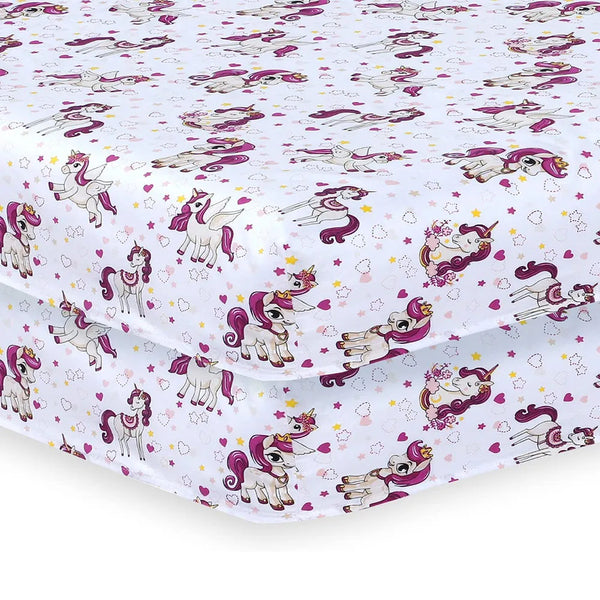
Shop Matching Cot Bedding Sets
For a coordinated nursery look — and the convenience of buying fitted sheets, duvet covers, and pillowcases together in one purchase — our children's bedding sets offer excellent value and a beautifully cohesive aesthetic. Each set is designed to work together as a complete sleep environment, with all items sized correctly for a standard UK cot bed and crafted from the same quality fabrics throughout.
Our cot bed bedding sets are available in a range of designs — from timeless, gender-neutral palettes to vibrant character-inspired prints — making it easy to find a set that suits your nursery décor and your personal style. Browse the complete range at Dtex Homes children's bedding sets collection and find the perfect combination for your baby's room.
What Our Cot Bed Bedding Sets Include
- Duvet cover sized for a standard cot bed duvet (120cm x 150cm)
- Pillowcase sized for a standard cot bed toddler pillow (40cm x 60cm)
- Coordinating design across all pieces for a complete nursery aesthetic
- Available as sets with or without fitted sheets depending on the collection
Complete Your Nursery with Essential Baby Bedding
Beyond sheets and duvet covers, a fully prepared nursery requires a complete set of essential bedding items — each serving a specific purpose in creating a safe, comfortable, and hygienic sleep environment. At Dtex Homes, our children's bedding range covers every item on your nursery checklist:
- Fitted sheets for cot beds — in cotton, jersey, and Egyptian cotton
- Cot bed duvet covers and pillowcases — in coordinated bedding sets and individual pieces
- Children's bedding sets — complete coordinated collections for every nursery style
Choosing the Right Size with Confidence
If this guide has achieved one thing, it is this: you now know exactly how to choose the right cot bed sheet size, the right cot bed duvet dimensions, and the right bedding for every stage of your baby's development — with safety, comfort, and quality firmly at the centre of every decision.
To summarise the key sizing reference points covered throughout this guide:
Final Cot Bed Sizing Quick Reference
| Item | Standard UK Cot Bed Size | Standard UK Cot Size |
|---|---|---|
| Mattress | 139cm x 69cm | 119cm x 59cm |
| Fitted sheet | 140cm x 70cm | 120cm x 60cm |
| Duvet | 120cm x 150cm | ~100cm x 120cm |
| Duvet cover | 120cm x 150cm | ~100cm x 120cm |
| Pillow | 40cm x 60cm | 40cm x 60cm |
| Pillowcase | 40cm x 60cm | 40cm x 60cm |
| Mattress protector | 140cm x 70cm | 120cm x 60cm |
Armed with these measurements and the knowledge in this guide, you can shop for baby cot bedding with complete certainty — knowing that every item you buy will fit correctly, meet current UK safety standards, and provide your baby with the safe, comfortable sleep environment they deserve from their very first night at home.
Frequently Asked Questions About Cot Bed Sheet Sizes
What size is a cot sheet UK?
A standard cot sheet in the UK measures 120cm x 60cm. This fits a standard cot mattress, which typically measures around 119cm x 59cm. Always measure your mattress directly before buying, as sizes can vary slightly between brands. If your baby sleeps in a cot bed rather than a standard cot, you will need a larger sheet measuring 140cm x 70cm instead.
What size sheet goes on a cot bed?
A cot bed fitted sheet should measure 140cm x 70cm to fit a standard UK cot bed mattress correctly. The sheet also needs a pocket depth of at least 15cm to wrap securely underneath the mattress and stay in place overnight. Always use a fitted sheet rather than a flat sheet in a cot bed, as loose fabric is a safety risk for babies and young children.
Is a cot sheet the same as a crib sheet?
No — a cot sheet and a crib sheet are not the same size. A crib is smaller than a cot and is typically used for newborns up to around six months. Crib sheets usually measure around 90cm x 40cm, while standard cot sheets measure 120cm x 60cm. Using a crib sheet on a cot mattress will result in a poor fit and a potential safety hazard, so always match the sheet to the specific bed type your baby is sleeping in.
Can Crib Sheets Fit a UK Cot Bed?
No — crib sheets cannot fit a UK cot bed. A crib sheet is significantly smaller than a cot bed sheet, measuring around 90cm x 40cm compared to the cot bed size of 140cm x 70cm. Trying to stretch a crib sheet over a cot bed mattress will cause the corners to pop off repeatedly, leaving loose fabric on the sleep surface — which is unsafe for babies. Always buy bedding that is specifically sized for the bed your baby is actually sleeping in.
How Many Cot Sheets Should I Buy?
Most parents find that three to five fitted cot sheets is the right number to keep in rotation. With a newborn especially, sheets can need changing multiple times a day due to nappy leaks, milk spills, and sick — so having extras ready means you are never caught short at 3am waiting for the washing machine to finish. As your baby gets older and accidents become less frequent, a rotation of three sheets is generally plenty for a weekly laundry routine.
How Often Should I Replace Cot Bed Sheets?
As a general guide, cot bed sheets should be replaced every 12 to 18 months of regular use — or sooner if the elastication has lost its grip, the fabric has thinned or pilled, or the sheet no longer fits the mattress properly after repeated washing. A sheet with worn-out elastic that pops off the mattress corners is no longer safe to use, regardless of how good it looks. Checking your sheets every few months takes seconds and keeps your baby's sleep environment safe and hygienic.


